
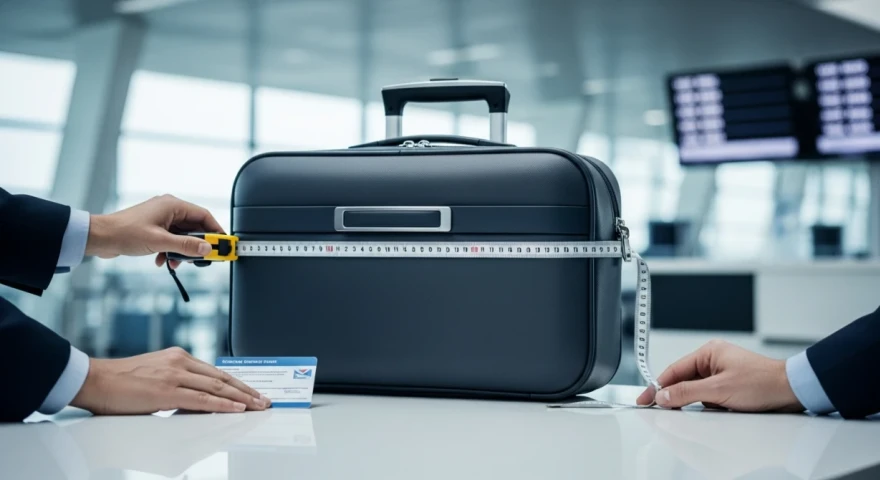
What Cabin-Approved Luggage Means for UK Travellers Choosing the Right Bag
Cabin-approved means a bag is designed for onboard travel, but airline size limits still decide. Check the full outside dimensions, choose the right shell type, and avoid overpacking.
The mistake usually happens at the airport, not at checkout. A bag is labeled as a cabin option, the traveler assumes that means every airline will accept it, and then the gate staff says it must be checked because the size or shape does not fit that carrier’s limits.
That matters more now because people are traveling lighter, switching between airlines more often, and relying on one small case for short breaks and work trips. When people ask what cabin-approved luggage really means, the useful answer is simple: treat it as a starting point, then match the bag’s actual dimensions, structure, and packing style to the airline you are flying.
🧳 What “cabin-approved” means in real travel
In practice, cabin approval is not a universal legal standard. It usually means a case is designed for overhead cabin use and sold in a size category intended for hand baggage, but the final decision still depends on the airline’s own allowance.
That is why size labels alone are not enough. A cabin suitcase may be suitable for one route and too large for another if the carrier applies tighter measurements or includes handles and wheels in the total dimensions.
The smarter way to read the term is as a category signal, not a guarantee. For UK travelers, the real test is whether the bag fits the airline’s stated dimensions, weight rules, and the way you plan to pack it.
- Size category: Cabin usually points to a smaller case meant for onboard use.
- Physical build: Wheels, shell shape, and front pockets can affect whether it actually fits.
- Packing reality: An overstuffed soft bag can exceed limits even if the listed size looks fine.
- Airline control: Staff may assess the full packed bag, not the empty product label.
📏 Where people get it wrong
The biggest misunderstanding is assuming “cabin-approved” means “approved by all airlines.” It does not. Airlines set their own limits, and those limits can differ enough to turn a normally acceptable bag into a checked item.
Another common error is focusing only on height and width while ignoring depth. That catches travelers with soft-shell cases in particular, because flexible fabric expands outward when packed tightly.
People also confuse overhead cabin baggage with an under-seat personal item. A compact backpack from the bags collection may work better for that second category than a wheeled case, especially on stricter fares.
“Cabin friendly” works best as a shopping filter, not as your final boarding check.
Common airline cabin-bag guidance
| What travelers assume | What it actually means |
|---|---|
| If it says cabin, it is always allowed onboard | It is intended for onboard use, but airline limits still decide |
| Hard shell is always safer for cabin travel | It protects structure well, but fixed dimensions give less flexibility |
| Soft shell always fits because it compresses | It may bulge when full and fail a sizer check |
| A personal bag and cabin case are the same | They are often different allowances with different size expectations |
🎒 How to choose the right option for your trip
The best choice depends less on the label and more on the trip pattern. A weekend city break, a one-night work trip, and a five-day journey with electronics all put different pressure on the same bag.
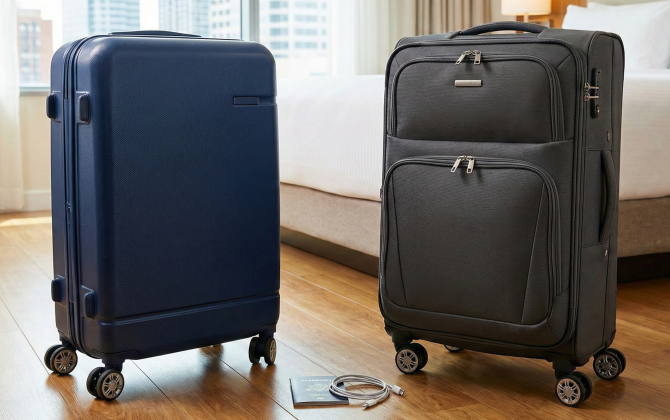
If you want a structured case that keeps its shape, a hard-shell model is usually easier to judge against airline limits because the dimensions stay more consistent. On the suitcases page, the Canary and Finch hard-shell ranges are presented as lightweight wheeled options with a telescopic handle and combination lock, which suits travelers who want predictable form.
If you expect to squeeze in an extra layer or prefer outer flexibility, the Eagle soft-shell option can make sense. Just remember that a packed soft case can be the one that tips you over the limit, even when the empty bag looks compact.
| Model | Type | Material style | Useful travel signals | Price |
|---|---|---|---|---|
| Canary Hard Shell Suitcase | Hard shell | Polycarbonate or ABS-style hard case category | Lightweight, wheeled, telescopic handle, combination lock | £55 |
| Finch Hard Shell Suitcase | Hard shell | Polycarbonate or ABS-style hard case category | Lightweight, wheeled, telescopic handle, combination lock | £55 |
| Eagle Soft Shell Suitcase | Soft shell | Flexible fabric-style case category | Wheeled design with more give when packing | £50 |
When a hard shell makes more sense
- Short work trips: Better for folded outfits and a clean rectangular packing shape.
- Fragile contents: The rigid body helps protect electronics and structured items.
- Strict sizer checks: Fixed dimensions reduce surprises at the gate.
When a soft shell can be the better call
- Mixed packing: Easier for jackets, knitwear, or slightly awkward soft items.
- Surface access: Flexible construction can feel more forgiving during fast packing.
- Budget-sensitive choice: The listed Eagle model comes in below the hard-shell options.
✈️ Practical decision scenarios that save money and stress
Scenario one: you are flying for two nights with one pair of shoes, a laptop, and light clothing. A compact hard-shell case works well if you want shape control, while a separate small backpack can handle items you need at your seat, such as documents or chargers.
In that setup, your decision is not just about the case. It is also about keeping carry-on accessories small and organized so they do not force the main bag to bulge.
Scenario two: you are traveling for four or five days and expect to bring back extra clothing or gifts. A soft-shell option may feel easier at home, but it becomes riskier if you pack right to capacity and then rely on the bag still fitting a restrictive sizer frame.
A realistic outcome is simple. The traveler who leaves expansion room usually boards without trouble, while the traveler who packs to the zipper often ends up paying for hold luggage or repacking at the gate.
- Weekend break: Choose a structured cabin case if you want reliable shape and easier overhead storage.
- Business overnight: Pair a small case with a laptop backpack so documents and devices stay accessible.
- Flexible shopping trip: Use a softer case only if you commit to packing below full volume.
- Family split packing: Consider browsing luggage sets when you want matching sizes across cabin and checked categories.

🔍 The checks that matter before you fly
Most people look at color, wheels, and lock style first. Those matter, but they do not answer the airport question, which is whether the packed bag will still fit the allowance.
Use a simple pre-flight check that focuses on measurable points. This is where a good-looking travel suitcase becomes a practical one.
- Check the full outside dimensions: Include wheels, feet, side handle, and top handle in your mental measurement.
- Think about packed depth: Soft shells and front-loaded bags can expand farther than expected.
- Review wheel format: Two-wheel and four-wheel cases move differently, which affects tight airport spaces more than airline acceptance.
- Confirm lock and handle quality: A combination lock and telescopic handle are useful, but they should not tempt you to ignore size fit.
- Separate seat-access items: Keep liquids, chargers, passport, and medication in a smaller personal bag if allowed.
🧼 Common mistakes and how to prevent them
One frequent mistake is buying by label without comparing structure. A rigid case keeps a neat footprint, while a flexible one can cross the line once filled, so the same packing list does not behave the same way in both.
Another is using bulky organizers that waste space. Good luggage accessories help control categories, but they should compress clutter, not add more rigid layers inside the case.
Travelers also forget the role of secondary items. A travel pillow clipped outside, a full toiletry pouch, or an oversized laptop sleeve can make an otherwise sensible bag awkward to store or harder to classify at boarding.
| Mistake | Why it causes problems | Better move |
|---|---|---|
| Packing to the zipper line | Depth increases and fit becomes less reliable | Leave spare room, especially in soft-shell bags |
| Treating cabin labels as universal approval | Airline rules vary | Check your carrier before every trip |
| Using one bag for everything at your seat | Frequent access creates messy repacking | Keep documents and tech in a separate personal bag |
| Buying extras without thinking about volume | Pouches and add-ons can eat space | Choose compact organizers and travel bottles |
✅ Priority checklist before you buy or pack
If you want the shortest version of the decision process, use this order. It helps you avoid paying for features that do not solve the real airport problem.
- Start with airline limits: Check the actual hand-baggage allowance for your route, not your last trip.
- Choose bag structure second: Hard shell for fixed shape, soft shell for flexibility with discipline.
- Pack for fit, not just capacity: Leave room so the case keeps its intended profile.
- Add compact support items: Travel bottles, organizers, a luggage strap, or a tag should make handling easier, not bulkier.
- Decide your second bag early: If you need a personal item, use a compact backpack or crossbody that suits under-seat use.
For many UK travelers, the best result is not the biggest bag that might pass. It is the smallest setup that handles the trip cleanly and still boards without debate.
Cabin-approved usually means a bag is designed for onboard travel, not that every airline must accept it. The right choice comes down to real dimensions, bag structure, and how full you plan to pack it. Hard-shell cases offer more shape certainty, while soft-shell options need more discipline once loaded. If you want a practical option for your next trip, explore threebirds’ cabin-ready luggage range.
Does cabin-approved mean every airline in the UK will allow the bag onboard?
No. It signals intended use, but each airline still applies its own size and packing rules.
Is a hard-shell case better for cabin travel?
It is often easier to judge because the shape stays consistent. That helps when airlines use sizer frames.
Can a soft-shell bag fail a cabin check even if it looked small when empty?
Yes. Once fully packed, the depth can expand enough to create a problem at boarding.
What should go in a separate personal bag instead of the main case?
Keep items you need during the flight there, such as documents, devices, chargers, and toiletries allowed for hand baggage.
Which listed suitcase is the lower-priced option among the featured models?
The Eagle Soft Shell Suitcase is listed at £50, while the Canary and Finch hard-shell models are listed at £55.
Do wheels and handles count when thinking about cabin fit?
They should. The outside footprint matters, not just the main body of the bag.
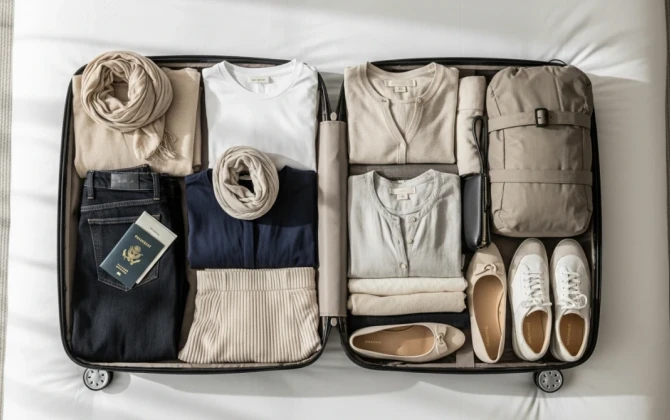 How to Build a Capsule Wardrobe for Travel That Works Anywhere in the World
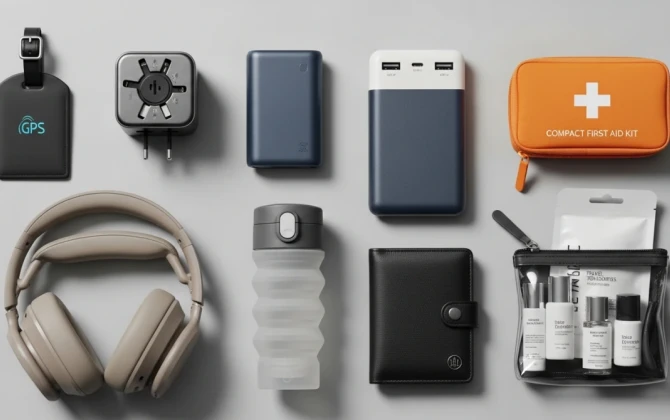 Travel Accessories Worth Packing in 2025: Essentials That Truly Upgrade Every Trip