
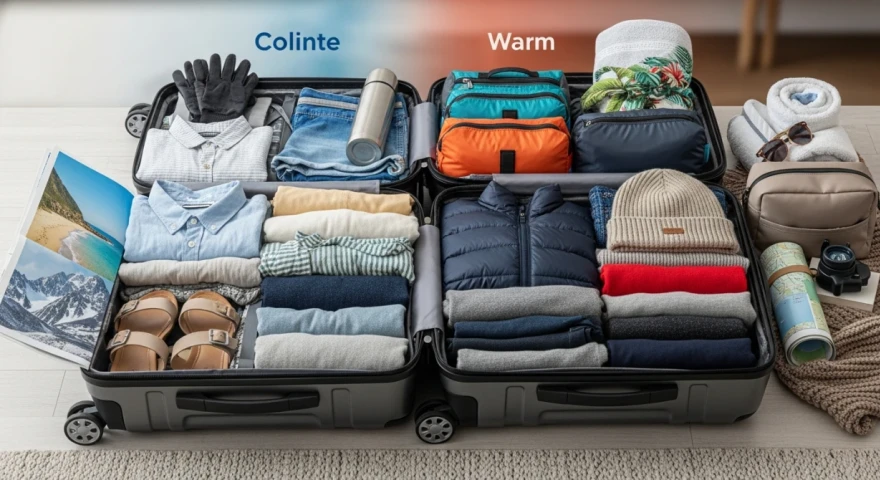
Packing for Two Climates: How to Manage One Trip With Very Different Weather
Pack for the coldest part first, then use a three-layer wardrobe, two pairs of shoes, and the right suitcase plus personal item to cover both climates without overpacking.
The usual mistake on a warm-city-plus-cold-region trip is packing two separate wardrobes, then realizing the problem is not only clothing volume but also the lack of a system. A week that starts in dry heat and ends in rain, wind, or mountain cold exposes every weak packing decision fast.
This is a practical packing article for travelers trying to fit very different weather into one luggage setup without losing comfort, function, or personal style. If you are balancing limited baggage, changing temperatures, and uncertainty about suitcase size, day-bag choice, or layering, the most efficient answer is to plan from the itinerary backward.
A personal item matters more on this kind of trip than people expect. Whether you prefer a crossbody, tote, or travel rucksack, that smaller bag becomes the place for removable layers, electronics, and anything you may need when the weather flips between departure and arrival.
Why is packing for two climates so difficult?
Packing for two climates is hard because travelers usually overestimate the need for separate outfits and underestimate the value of modular layers. The fix is to plan for the coldest conditions first, then make the warm-weather part work by removing layers rather than adding whole extra looks.
A common example is a nine-day route with six days in a warm city and three days in a colder mountain area. The warm segment suggests light clothing, the cold segment demands insulation and weather protection, and the result is often too many tops, too many shoes, and the wrong luggage combination.
We see the same pattern repeatedly. Travelers either force everything into a small cabin case and end up without enough warmth, or they check a large suitcase full of duplicate items they never wear.
Research on outdoor human thermal perception shows that comfort changes significantly across climate conditions, which is one reason itinerary-specific planning matters more than a generic packing list.
pubmed.ncbi.nlm.nih.gov
What should you know before you choose luggage?
You should choose luggage only after mapping temperatures, rain risk, transport, and activity type across the full route. If you skip this step, you are guessing volume instead of measuring it.
Start with the lowest and highest likely temperatures for every stop, not just daytime averages. Overnight lows, wind, and rain matter because they determine whether you need a true outer layer, not just another sweater.
Then separate the trip into activity blocks. A city break, business meeting, beach day, train transfer, and mountain walk create different clothing and bag demands even if they happen in the same week.
Must-do research before you pack
- Temperature range: Write down expected daytime highs and nighttime lows for each destination.
- Rain likelihood: Note whether you need a waterproof shell, quicker-drying clothes, or protection for electronics.
- Transport mode: Flights, trains, road transfers, and stairs affect whether you can manage a larger case comfortably.
- Dress level: Mark any formal dinners, business settings, or venues with stricter clothing expectations.
- Activity intensity: Separate low-sweat city sightseeing from hiking, long walks, or outdoor excursions.
- Laundry access: One wash mid-trip can cut your clothing count noticeably.
Should-do checks that prevent packing mistakes
- Transit weather: Include the climate during travel days, because that is when you wear your bulkiest items.
- Footwear needs: Decide whether your second pair is for beach, smarter occasions, or rougher terrain.
- Wet-item strategy: Plan where a damp shell, umbrella, or worn base layer will go after use.
Worksheet: know these answers before you pick a suitcase
- Coldest temperature on the trip: ______
- Warmest temperature on the trip: ______
- Will I face rain or wind? Yes / No
- How many activity types do I need to cover? ______
- Do I have laundry access? Yes / No
- Can I wear my bulkiest layer in transit? Yes / No
- Do I truly need more than two pairs of shoes? Yes / No
- Will I be happier with one suitcase or a full set plus personal item? ______
How do you build one wardrobe that works in hot and cold weather?
The most efficient system is a three-layer setup: base layer for moisture management, mid-layer for insulation, and outer layer for wind or rain protection. This reduces the total number of garments because each piece works with the others instead of serving only one climate.
The three-layer modular system is proven because it lets you adapt by adding or removing pieces. That is why it works better than packing heavy, fixed outfits for each destination.
Must-have layers
- Base layer: Lightweight T-shirt, merino tee, tank, or long-sleeve top that sits against the skin and handles sweat.
- Mid-layer: Fine knit, light fleece, overshirt, or thin insulated piece that traps warmth when temperatures drop.
- Outer layer: Waterproof or wind-resistant shell that protects the other layers from rain and exposure.
For a warm afternoon, the base layer may be enough. For a chilly morning, you add the mid-layer. For a cold, wet evening, you wear all three together.
This is the key objection to solve: no, you do not need a fully separate wardrobe for each climate. You need fewer garments that combine well and can shift roles across the week.
Nice-to-have additions if your trip demands them
- Compact scarf or buff: Useful in cold air, on transit, and for light style variation.
- Packable hat or cap: Helps in sun or drizzle without taking much space.
- One smarter layer: A clean overshirt, knit, or structured top can elevate basic pieces for dinner or meetings.
Which fabrics make the biggest difference across two climates?
The best fabrics for mixed-weather travel are breathable, quick-drying, and easy to layer. Merino wool and synthetic blends work especially well because they help regulate temperature and handle moisture better than bulky, slow-drying pieces.
Merino wool is useful because it can absorb up to 30% of its weight in moisture and still feel dry. That makes it a strong base or light mid-layer when you move between humid warmth, air-conditioned interiors, and cooler evenings.
Synthetic blends also earn space in a two-climate capsule because they dry fast after washing, resist feeling heavy when damp, and stay practical for active days. The main rule is not to pack fabrics that require special care, stay wet for too long, or only work in one temperature band.
Fabric priorities in order
- Must-do: Choose tops that can be reworn and dry overnight if washed.
- Should-do: Use at least one merino or performance base layer for the widest temperature range.
- Should-do: Favor lighter knits and shells over thick single-purpose garments.
- Nice-to-do: Add one texture or color accent so the capsule still feels styled, not purely functional.
How many clothes do you actually need for a two-climate trip?
Most travelers need fewer clothes than they think, especially if they can repeat layers and wash once. A small capsule built around interchangeable tops, two or three bottoms, and one proper shell usually covers both warm and cold segments.
The easiest way to control volume is to pack for the coldest scenario first, then check whether each item still earns its place in warmer weather. If it only works in one narrow situation, it is usually the first thing to cut.
| Category | 4 to 7 days | 8 to 12 days | Adjustment rule |
|---|---|---|---|
| Tops | 4 to 5 | 5 to 7 | Add one only if you cannot do laundry or have formal plans |
| Bottoms | 2 to 3 | 3 | Choose pieces that work with both walking and dining |
| Base layers | 2 | 2 to 3 | One can double as a sleep or lounge top |
| Mid-layers | 1 to 2 | 2 | Keep them light enough to stack |
| Outerwear | 1 shell | 1 shell | Wear it in transit if space is tight |
| Underwear and socks | 5 to 7 sets | 7 to 9 sets | Reduce if washing mid-trip |
| Accessories | 2 to 4 items | 3 to 5 items | Pick compact pieces with weather or style value |
Minimal capsule example
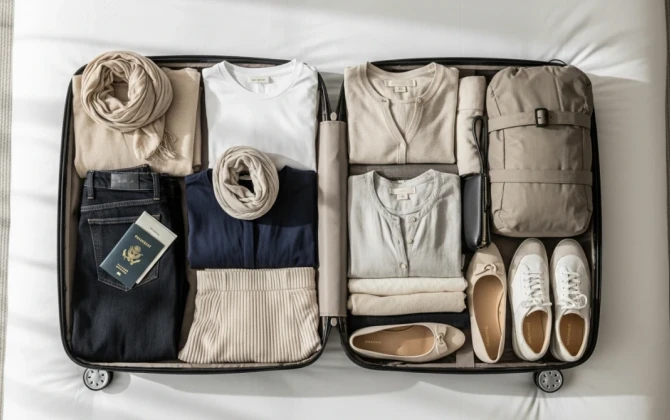
- 5 tops: 3 lightweight tops, 1 long-sleeve base layer, 1 smarter top or shirt.
- 3 bottoms: 1 lightweight trouser or jeans, 1 more relaxed or warm-weather option, 1 activity-specific bottom if needed.
- 2 mid-layers: 1 knit or fleece, 1 overshirt or thin second layer.
- 1 outer shell: Waterproof or weather-resistant outer layer.
- 1 sleep set: Preferably something that can double as loungewear.
- Underwear, socks, and small accessories: Sized to your trip length and wash access.
If the trip is very short, remove one top and one underwear set. If it is longer, increase only the items hardest to rewear or wash, not the whole wardrobe.
Are two pairs of shoes really enough?
Yes, two pairs are enough for most two-climate trips if each pair has a clear job. One should handle long walking days, and the second should cover the trip-specific need such as smarter dinners, beach use, or light outdoor activity.
Shoes are the fastest way to lose space and add weight. Limiting footwear to two pairs forces better choices and keeps room for the layers that matter more when weather changes.
How to choose the two pairs
- City plus hiking: Wear your supportive walking or trail-capable pair, then pack a lighter smart-casual option.
- City plus beach: Wear comfortable walking shoes, then pack sandals or another light second pair.
- Business plus leisure: Wear the bulkier all-day pair, then pack the cleaner formal or polished option.
If you think you need a third pair, test the reason. If it is only for one dinner, one short activity, or a style preference rather than a functional need, it usually does not justify the volume.
Your smaller bag also needs a clear role. A practical personal item from our bags collection, especially a crossbody, shopper, or travel bag, works well for carrying a removed mid-layer, documents, and the essentials you do not want buried in the main case.

What luggage combination works best for a two-climate trip?
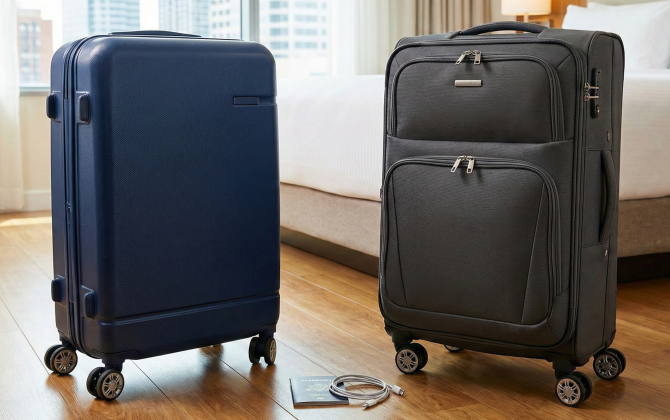
The right combination depends on trip length, climate spread, and how often you change locations. Carry-on only is realistic for shorter routes with repeatable layers, but a checked case plus cabin piece is the better choice when cold-weather gear, extra footwear, or bulkier outerwear is unavoidable.
The real goal is not to pack into the smallest possible case. It is to choose a setup that lets you stay organized, move easily, and protect weather-sensitive items without overpacking.
Our suitcases are designed for exactly this kind of mixed-weather trip because they are lightweight and easy to handle, with wheels, telescopic handles, and combination locks. That matters when you are carrying extra layers, shifting between transport types, or opening your case more often to adapt to the weather.
| Trip pattern | Best setup | Go / No-Go signal |
|---|---|---|
| 4 to 6 days, mild cold, laundry possible | Cabin suitcase plus personal item | Go if you can wear your bulkiest layer in transit and stick to two shoes |
| 7 to 10 days, warm city plus distinctly colder region | Medium suitcase plus personal item | Go if you need a real shell and layered clothing but not heavy specialty gear |
| Longer trip, family packing, or multiple activity types | Checked suitcase plus carry-on or full set | Go if you need better separation for shoes, outerwear, and shared items |
| Frequent transfers, stairs, and minimal gear tolerance | Smaller case with strict capsule | No-Go for a large case if mobility matters more than spare capacity |
If you are weighing a single case against a coordinated setup, start with our luggage sets. A set makes sense when you want one checked suitcase for the full clothing plan and one smaller piece or personal item for day-to-day management on travel days.
Must-do decision rules
- Choose checked luggage: When the cold segment requires true outerwear, you have no laundry access, or you need to separate gear cleanly.
- Choose carry-on only: When the trip is shorter, your layers are lightweight, and you can wear the bulkiest pieces in transit.
- Add a personal item: When you need quick access to removable layers, chargers, documents, and valuables.
How do you pack everything so it fits and stays protected?
The best packing method is category-based organization with compression only where it helps, plus a system for damp or weather-exposed items. Fitting two climates into one case is less about aggressive squeezing and more about separating functions clearly.
Group by use, not by outfit. Keep warm layers together, daily tops together, and weather gear in one predictable zone so you can adapt without unpacking the whole suitcase.
Execution order that works
- Pack the least-used bulky items first: Outer shell, spare shoes, and colder-weather pieces at the bottom.
- Add the repeat-wear capsule next: Tops, bottoms, and underwear in the middle.
- Reserve top access for live items: Transit layers, toiletries, chargers, and anything you may remove or add on arrival.
- Use separate pouches or organizers: This keeps damp, dirty, or weather-sensitive items from spreading through the case.
If sudden rain is one of your worries, the protection strategy is simple. Use a waterproof outer layer, keep electronics and documents in the smaller bag, and separate any wet item before it touches the rest of your clothing.
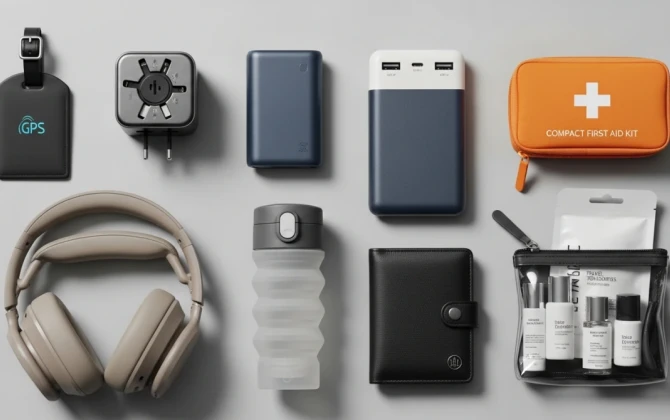
Organizers from our travel accessories category are especially useful here because they divide clothing into zones and help reduce creasing. Accessories for hand luggage are also the practical place to keep documents, gadgets, and small items you may need while your main case stays closed.
You may see examples elsewhere of compressible weatherproof daypacks, such as the Matador Freefly16, used for mixed-weather travel. The useful lesson is the feature set, not the brand name: if you want a compact secondary bag, look for packability, weather resistance, and easy separation of wet and dry contents when choosing your own setup.
What are the biggest risks, and when should you stop and repack?
The biggest risks are duplicate clothing, too many shoes, and luggage that does not match the route. You should stop and repack if your bag solves the warm destination but leaves you underprepared for the coldest point of the trip.
Critical misses
- No real outer layer: A thick knit is not enough if wind or rain is likely.
- Three or more shoe pairs without a strong reason: This usually means your wardrobe is not integrated.
- Heavy single-purpose clothing: Bulky items that only work in one location waste space fast.
- No wet-item plan: Damp layers can affect the rest of your packing if you do not isolate them.
- Case too full before toiletries and tech: This is an early no-go signal that your clothing count is already too high.
Go / No-Go readiness checklist
- Go: Every packed item works in at least two outfits or two temperature settings.
- Go: You can describe your base, mid, and outer layer without hesitation.
- Go: You are carrying only two shoe pairs unless the itinerary has a clear technical requirement.
- Go: The personal item has space for one removed layer, valuables, and travel essentials.
- No-Go: You packed separate warm-weather and cold-weather wardrobes with little overlap.
- No-Go: You need to sit on the suitcase before adding toiletries, chargers, or souvenirs.
- No-Go: The bag setup does not match your transfers, stairs, or transport constraints.
How do you turn this plan into a final buying decision?
Your buying decision should follow the packing plan, not the other way around. Once you know your coldest conditions, activity mix, and footwear count, it becomes much easier to shortlist the right suitcase size and supporting bag.
If your worksheet points to a medium or checked case, a browsable starting point is the threebirds range of suitcases and luggage sets, then a practical personal item from the bags category to handle layers and daily essentials. That combination is usually the cleanest answer for a trip that crosses climates without crossing into overpacking.
One trip with very different weather does not require two separate wardrobes. It requires a colder-first plan, a layered capsule, disciplined shoe choices, and a luggage setup that keeps everything accessible and protected.
When the itinerary is clear, the luggage decision becomes much simpler: shorter and lighter trips can work with a cabin case, while bigger temperature swings usually justify a medium or checked option plus a personal item. Organizing by layer and function, rather than by separate destination, is what makes the whole system fit.
Use your worksheet, cut single-purpose items, and choose the suitcase and bag combination that matches the route you are actually taking. Browse the threebirds suitcase, luggage set, and bag categories to turn your plan into a packed setup you can trust.
Should I always pack for the coldest part of the trip first?
Yes. You can remove layers in warmth, but you cannot create insulation you did not bring when temperatures drop.
Can I manage two climates with carry-on only?
Sometimes, especially on shorter trips with light layers and laundry access. It becomes harder when you need bulkier outerwear or an extra pair of activity-specific shoes.
Why is merino useful on mixed-weather trips?
It handles moisture well and remains comfortable across temperature changes. That makes it effective as a base or light insulating layer.
What should go in my personal item on a two-climate trip?
Keep removable layers, documents, electronics, medications, and anything you need if weather changes during transit. It should also have space for one item you take off on the move.
When is a luggage set better than one suitcase?
A set is more practical when you need a checked case for the main wardrobe and a second piece for transit essentials or short side trips. It also helps when the route involves multiple activity types.
Is two pairs of shoes really realistic for city and outdoor travel?
Usually yes if one pair is comfortable enough for long walking and the second covers the special use case. The key is choosing function-first pairs instead of packing style duplicates.
How do I stop wet clothes from affecting the rest of my packing?
Separate damp items immediately using pouches or organizers and keep them away from dry layers. A weather-resistant shell and a clear wet-item zone make this much easier.
 How to Build a Capsule Wardrobe for Travel That Works Anywhere in the World
 Travel Accessories Worth Packing in 2025: Essentials That Truly Upgrade Every Trip