
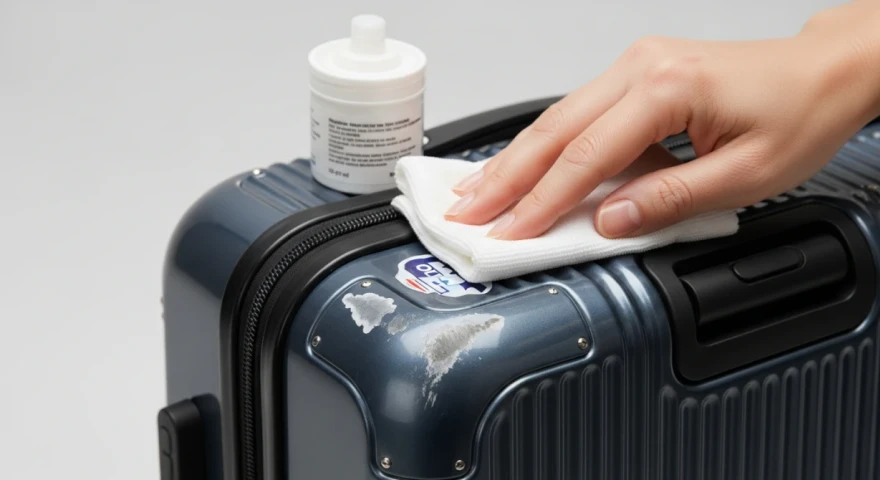
How to Remove Stubborn Stickers and Scuff Marks From Your Luggage
Soften stickers first, remove residue in stages, and treat scuffs with light controlled wiping after testing a hidden area. Stop if the finish dulls, fibers lift, or color transfers to the cloth.
The worst time to notice sticker residue or black scuff streaks is right before a trip, when a clean case suddenly looks worn out even though the shell is still in good shape. Many people scrub too hard, which can spread adhesive, dull the finish, or rough up fabric panels.
That matters more now because modern cases often mix smooth hard shells, coated trims, and textured handles, so one aggressive cleaner can leave a more visible mark than the original stain. The safest approach is to identify the surface first, loosen the mess gradually, and only step up pressure when the material handles it well.
🧭 When should you use this cleaning workflow, and when should you stop?
Use this workflow when your case has sticky label residue, paper remnants, transfer marks, or superficial black rub lines from conveyor belts, floors, or other bags. Do not use it if the surface is cracked, peeling, deeply gouged, or if the mark is actually a scrape through the outer finish rather than something sitting on top of it.
A hard shell usually tolerates more controlled wiping than a soft shell panel, but both need a test spot first. If color comes off on your cloth, if the texture starts lifting, or if the area feels tackier after cleaning, stop and switch to a gentler method.
- Good candidates: Sticky airport labels, glue haze, rubbery transfer lines, shallow surface scuffs, and dirt trapped around wheels or corners.
- Proceed carefully: Textured shells, printed logos, stitched fabric fronts, zipper tape, and coated trim.
- Do not treat as a scuff: Cracks, frayed fabric, cut fibers, chipped corners, or abrasions that expose a different layer underneath.
| Surface type | Common mark | Safe starting method | Risk signal |
|---|---|---|---|
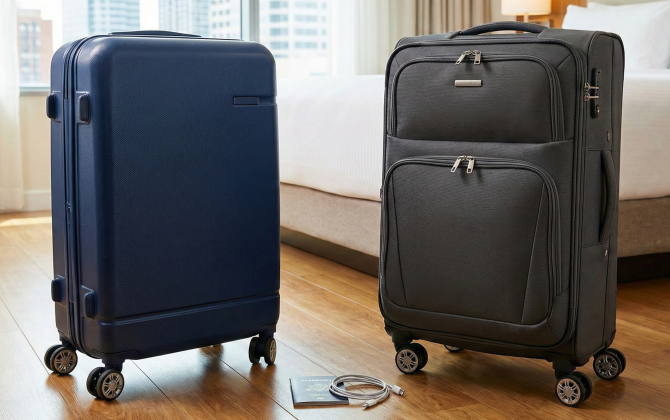
| Hard shell, polycarbonate or ABS | Sticker glue, rubber transfer, shallow scuffing | Warm damp cloth, then gentle rubbing with a soft cloth | Finish turns dull or streaky |
| Soft shell fabric | Adhesive residue, dirt, edge smears | Blotting and light wiping, not scraping | Color transfers to cloth or fibers fuzz up |
| Handles, telescopic grip area, wheel housing | Dark rub lines and grime | Targeted wiping with controlled pressure | Sticky feel remains or plastic whitens |
🧰 What should you prepare before cleaning?
You need soft cloths, lukewarm water, and enough time to work in short passes instead of one aggressive scrub. Optional helpers such as a suitcase cover, luggage strap, or organizers are useful afterward because they reduce future rubbing and label contact during travel.
Preparation matters because residue removal is easier when the surface is dry, stable, and fully visible under good light. Empty the case, extend the handle, and place the bag on a table or floor where it will not roll.
- Clear the area: Remove dust first so grit does not create fresh scratches while you wipe.
- Choose your cloths: Use one damp cloth for loosening residue and one dry cloth for lifting it away.
- Check hidden spots: Test under the handle or near the back seam before touching the visible panel.
- Protect nearby details: Avoid soaking zippers, stitched labels, or combination lock areas.
If you are building a protection routine after cleaning, practical travel accessories such as suitcase covers, straps, and tags can help limit new scratches and make your bag easier to spot on the carousel. A cover is especially helpful if your shell tends to pick up conveyor scuffs quickly.
🪪 How do you remove stubborn stickers without damaging the surface?
The safest way to remove a stubborn sticker is to soften it first, lift the paper gradually, and deal with any remaining glue as a separate step. Pulling a dry label straight off often tears the paper and leaves a larger patch of adhesive behind.
Start with a warm, damp cloth pressed over the sticker for a short period. The goal is not to soak the case but to loosen the paper layer enough that it peels in larger pieces.
- Warm and hold: Press the damp cloth over the sticker for 20 to 30 seconds, then remove it and check whether an edge lifts cleanly.
- Peel slowly: Work from one corner and pull back low and slow instead of upward, which reduces tearing.
- Repeat if needed: If the sticker shreds, reapply the cloth and lift another section rather than scratching at the surface.
- Lift residue: Once paper is gone, rub the sticky area with a clean cloth using small circles and light pressure.
- Finish dry: Buff the panel dry so leftover tackiness is easier to detect.
On a hard shell, you can usually increase pressure slightly after the test spot succeeds. On a soft shell, keep the motion shorter and more like blotting, because glue can sink into the weave instead of rolling off the top.
Remove residue in layers, not in one pass. Softening first prevents the original mess from turning into a larger, shinier patch.
Cleaning best practice
👟 How do you get scuff marks off a suitcase or travel bag?
Most black scuff marks come off with controlled friction rather than heavy force. The key is to distinguish transfer marks, which sit on the surface, from true abrasion, which has already damaged the finish.
Begin with the least aggressive method. A slightly damp soft cloth often removes conveyor rub lines from hard shell cases and smooth trim pieces.
- Wipe once in one direction: This shows whether the mark is lifting or just smearing.
- Switch to short circular motions: If the line lightens, keep working in a small area instead of rubbing the whole panel.
- Dry and inspect: Some marks look worse when wet but disappear when dry, so check before repeating.
- Treat edges last: Corners near wheels and feet collect the most grime, so clean them after the main panel to avoid dragging dirt back across the shell.
Soft shell luggage needs a lighter hand because friction can raise the fabric nap and make the area look permanently fuzzy. If the mark sits across stitching or a zipper seam, wipe parallel to the seam rather than across it.
If you are replacing an older case with one that is easier to maintain, smooth hard-shell suitcases are generally simpler to wipe clean than fabric-front designs. Cases with durable shells, wheels, telescopic handles, and combination locks also benefit from regular spot cleaning around touch points.
✅ How do you verify that the bag is actually clean and not just wet?
A successful result looks even in normal room light and in angled light, with no tacky feel, dull patch, or widened stain border. Verification matters because moisture can temporarily hide glue and make a mark seem gone when it is still there.
Let the area dry fully, then check it with your fingertips and from different angles. On textured shells, run a finger lightly over the pattern to make sure residue is not trapped in the recesses.
- Sticker removal success: No paper fibers remain, the panel feels smooth, and your cloth no longer catches on the spot.
- Scuff removal success: The dark transfer line is gone or clearly reduced without a shiny rubbed patch around it.
- Soft shell success: The fabric color looks even and the fibers lie flat instead of appearing roughed up.
- Handle and wheel area success: No sticky or gritty residue transfers to your hand after drying.
| Check | What good looks like | What means you should stop |
|---|---|---|
| Touch test | Smooth, dry, non-sticky finish | Tacky patch or softened coating |
| Light test | Even tone from the front and side | Shiny rubbed halo around the mark |
| Color test on cloth | No transfer after final wipe | Surface color appears on cloth |
| Texture test | Original pattern or weave remains intact | Raised fibers, pilling, or flattening |
🔄 What should you do if the first cleaning attempt fails?
If the first pass does not work, slow down and change the method, not the force. Repeating the same hard scrub usually locks adhesive into texture or turns a light scuff into visible wear.
Failure usually falls into three categories: the sticker paper keeps tearing, the glue smears instead of lifting, or the mark is not a true surface transfer. Each one has a different next step.
- Paper keeps shredding: Re-soften with a warm damp cloth and peel smaller sections from the edge rather than picking at the center.
- Glue spreads into a haze: Stop rubbing broad circles and switch to short, controlled wipes with a clean part of the cloth each time.
- Mark looks unchanged after drying: It may be an abrasion through the finish, not a removable scuff.
- Soft shell starts to fuzz: Stop immediately and let the area dry flat before deciding whether the remaining discoloration is worth further treatment.
If damage is cosmetic but permanent, prevention becomes the better fix. A suitcase cover from the travel range can reduce repeat scratches, while luggage straps and tags help limit rough handling and make your bag quicker to identify.

🛡️ Which luggage accessories help prevent future sticker residue and scuffs?
The most useful add-ons are those that reduce direct contact, friction, and confusion at bag drop or on the carousel. Covers, straps, tags, and organizers all solve a different part of the problem.
Protection works best when it is matched to the way you travel. If your case is often checked, outside protection matters most. If you mostly carry on, internal organization helps reduce leaks and messes that make later cleaning harder.
| Accessory type | How it helps | Best use case |
|---|---|---|
| Suitcase cover | Shields shell from scratches and belt scuffs, makes the bag easier to identify | Frequent checked travel |
| Luggage strap | Adds a visible identifier and keeps the case more secure in transit | Busy airports and connecting trips |
| Tag | Reduces mix-ups that can lead to extra stickers and handling | Any checked bag |
| Suitcase organizers | Keeps contents separated and helps avoid internal mess reaching the shell lining | Longer trips and family packing |
| Travel bottles | Limits leaks from toiletries that can attract dirt inside the case | Carry-on and short stays |
These kinds of suitcase accessories are practical because they cut down on the repeated cleaning cycle, not just the visible damage. For travelers who mix work and leisure trips, simple protective gear is often more useful than a deeper clean after every flight.
🧠 What practical habits make a visible difference over time?
A few small habits prevent most stubborn marks before they build up. Clean sooner, isolate rubbing points, and store the bag dry and covered when possible.
- Remove fresh labels quickly: New stickers come off more cleanly than old ones that have bonded to the surface.
- Wipe transfer marks after each trip: Fresh conveyor scuffs usually need less pressure than marks left for weeks.
- Pay attention to corners and wheel housings: Those areas trap grime that spreads when the case is laid flat for cleaning.
- Use a cover for checked trips: It reduces cosmetic damage on both hard shell and soft shell designs.
- Keep the bag empty during cleaning: A loaded case flexes more, which makes controlled wiping harder.
For travelers choosing a new set, surface maintenance is worth considering alongside size and features. Some luggage sets can simplify matching your storage and protection routine across multiple bag sizes.
🧳 What do realistic cleaning scenarios look like?
One common case is a cabin hard shell that returns with two airport labels and a black line near the corner. After warming the stickers with a damp cloth, the paper peels off in larger pieces, the remaining tackiness lifts with short circular wipes, and the scuff lightens fully once the area dries.
Another example is a soft shell checked bag with a partial sticker on a front panel and dark rubbing near the base. The paper needs several short softening cycles, the residue must be blotted rather than scrubbed, and the lower mark improves only partly because some of the discoloration sits deeper in the fabric texture.
The point is not to force every blemish to disappear. The right outcome is a cleaner, more presentable case without trading a temporary mark for permanent surface damage.
📌 Conclusion
Sticker residue and scuff marks come off best when you identify the material first, soften the mess, and clean in short controlled passes. Hard shells usually allow more friction, while fabric panels need gentler blotting and faster stop points. Check the result only after the area dries, and treat unchanged marks as possible wear rather than dirt. If you want to prevent repeat damage, explore protective options from threebirds that help keep your case cleaner between trips.
Can I scrape a luggage sticker off with my fingernail?
You can lift a loose corner, but dry scraping usually tears the paper and leaves more glue behind. Soften the label first and peel it back slowly.
Why does a scuff mark look gone when wet and come back later?
Moisture can temporarily hide transfer marks and adhesive haze. Let the area dry fully before deciding whether you need another pass.
Are hard shell cases easier to clean than soft shell ones?
Usually yes, because surface transfer tends to sit on top of the shell instead of sinking into fibers. Fabric fronts need lighter pressure and more patience.
What part of a suitcase should I test first?
Use a hidden spot near the back, under the handle area, or along a less visible seam. If the finish changes there, do not continue on the front panel.
When should I stop trying to remove a mark?
Stop if color transfers to the cloth, the area turns shiny, or the texture starts lifting. Those signs point to surface damage rather than removable residue.
Do covers and straps actually help reduce new marks?
Yes, they reduce direct rubbing during baggage handling and make the bag easier to identify. That means less scratching and less chance of extra labels or mix-ups.
 How to Build a Capsule Wardrobe for Travel That Works Anywhere in the World
 Travel Accessories Worth Packing in 2025: Essentials That Truly Upgrade Every Trip