
How to Pack Fragile Items in Your Luggage Without Breaking Them
Wrap each fragile item, place it in the padded center of a tightly packed bag, and stop all movement with clothing or organizers. Structured luggage makes the method more reliable.
Most breakage happens before the trip even starts, when a glass bottle, camera, or souvenir is dropped into a half-full case with nothing to stop it moving. A suitcase is not just storage. For fragile items, it needs to work like a small protective container that can absorb drops, vibration, and pressure from other bags.
This is a practical packing guide for travelers carrying breakable things in checked luggage or a personal bag, from cosmetics and electronics to ceramics, jewelry, and pointed tools. The goal is simple: build a stable interior, reduce movement, and use the right luggage accessories and bag structure so your belongings arrive in one piece.
When should you use this packing method?
Use this method whenever you are carrying anything that can crack, leak, dent, scratch, or stop working if it is knocked around in transit. Skip the full version only when your bag contains soft clothing and nothing sensitive, or when a fragile item can stay safely on your person the whole trip.
Fragile in travel does not just mean obvious glassware. It includes anything harmed by impact, pressure, vibration, puncture, or liquid leakage during airport handling, car transfers, train racks, or hotel storage.
- Clearly fragile: glass bottles, jars, ceramics, framed items, ornaments, mugs, and delicate souvenirs.
- Functionally fragile: laptops, tablets, cameras, chargers, hard drives, headphones, and small appliances with screens or moving parts.
- Leak-prone items: perfumes, serums, foundations, nail products, and other liquid cosmetics.
- Tiny loss-prone items: jewelry, watch parts, cables, adapters, memory cards, and small gifts.
- Risk to other contents: scissors, hooks, grooming tools, or other sharp items that can pierce fabric and damage nearby belongings.
If an item would be expensive, inconvenient, or impossible to replace during the trip, treat it as fragile even if it is not made of glass.
Why do fragile items break inside luggage?
Fragile items usually break because they move inside the bag and then take concentrated force at one point. Airline and ground transport handling add drops, vibration, and compression from stacked luggage, which means even a strong suitcase cannot protect a loose object by itself.
Think of the stresses in three simple categories. First, there is impact when a case is lifted, rolled over curbs, set down hard, or shifted in transit. Second, there is repeated vibration, which slowly wears through padding and lets items rub against each other. Third, there is pressure from other bags, especially when a packed case has empty space that allows contents to collapse inward.
That is why packing technique matters as much as the outer shell. Professional transport guidance such as ASTM D4168 and ASTM D6198 focuses on interior cushioning and protective design, and the suitcase version of that principle is straightforward: stop movement, spread force, and keep fragile items away from edges and corners.
Avoid packing fragile items such as eyeglasses and glass containers in checked baggage whenever possible. If you must check them, wrap them carefully in padding.
Plane Talk: Tips on Avoiding Baggage Problems
What kind of luggage is safest for fragile items?
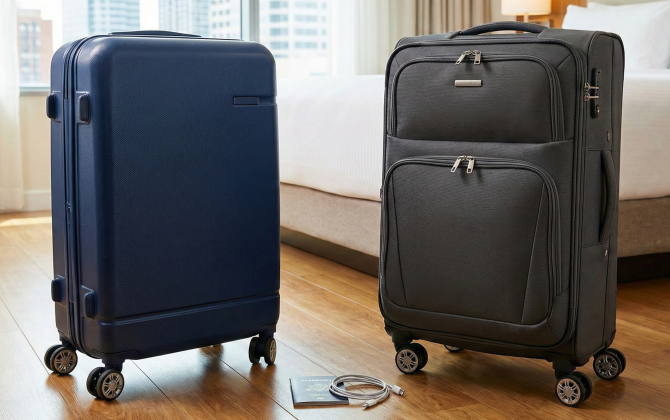
The safest option depends on the item, but structured luggage lowers risk because it limits crushing and keeps your protective layers in place. Hard-shell suitcases are usually better for breakables in checked baggage, while a structured personal bag is often safer for electronics and valuables you want close to you.
Hard-shell cases made from polycarbonate or ABS help resist external pressure and are useful when you are checking bottles, ceramics, or gifts. Soft-shell cases can still work well, especially if you pack tightly and create enough internal cushioning, but they rely more heavily on your layering and placement choices.
For day-of-travel essentials such as laptops, tablets, cameras, documents, and chargers, a dedicated personal item is often the safer choice. Our bags collection includes crossbody, tote, travel, and work bag options that keep fragile tech and valuables organized instead of buried inside a checked case.
| Situation | Best luggage choice | Why it helps |
|---|---|---|
| Glass bottles, ceramics, gifts in checked baggage | Hard-shell or other structured suitcases | Better resistance to crushing and better support for internal padding layers |
| Mixed clothing and a few delicate items | Soft-shell case packed tightly | Works if empty space is minimized and fragile items are placed in the protected center |
| Laptop, camera, chargers, documents, medication | Structured personal bag or travel bag | Keeps sensitive items under your control and easier to inspect without disturbing checked contents |
| Weekend trip with one liquid bottle and small electronics | Cabin case plus compact organizer system | Shorter handling chain and easier access for screening |
If you only have a soft suitcase, that does not mean your fragile items will break. It means the interior setup matters more, and upgrading later to a more structured case is worth considering if you travel with breakables more than occasionally.
How do you prepare your suitcase interior before packing?
Prepare the inside like a cushioning system, not a pile of items. Start by creating a soft base, defining separate zones, and gathering small pouches or organizers so every fragile object has both padding and restraint.
This preparation stage is where most space-saving happens. Instead of bulky specialty materials, use what already has to travel with you: sweaters, rolled T-shirts, scarves, socks, and soft sleepwear.
- Choose the right container first: Use the most structured suitcase or bag available for the type of item you are carrying.
- Sort by risk level: Separate breakables, leak-prone liquids, electronics, sharp items, and ordinary clothing before anything goes into the case.
- Create a bottom buffer: Put a thick layer of folded clothing at the base of the suitcase so nothing fragile sits directly on the shell.
- Assign zones: Keep shoes in one area, clothing in another, and sensitive items in their own section. Layering like this also supports easier screening.
- Use small containers inside the case: Pouches, wash bags, and organizers stop little items from drifting into hard contact with each other. Our travel accessories category is useful here because organizers and hand-luggage accessories add structure without taking over the whole bag.
- Remove dead space: Empty corners and gaps let items gain momentum. Fill them with socks, soft tops, or compact fabric items.
If you want to use an outer suitcase cover, that can help protect the case itself from scuffs and grime. Keep in mind that security may still need to open the cover, so the real protection should come from the internal layout, not the outer layer alone.
What is the step-by-step method for packing fragile items safely?
The safest method is to build from the outside in: soft base, stable middle, cushioned fragile zone, then a firm top layer that locks everything in place. A packed case should feel dense and controlled, not bouncy or rattly.
This is the core workflow we use when advising travelers who want shipping-style protection without turning their luggage into a moving box.
- Build the base: Lay heavier, soft items such as jeans, sweatshirts, or knitwear on the bottom of the suitcase.
- Place the heaviest durable items first: Shoes, toiletry bags with non-breakables, and dense clothing should go low and near the wheel side for stability.
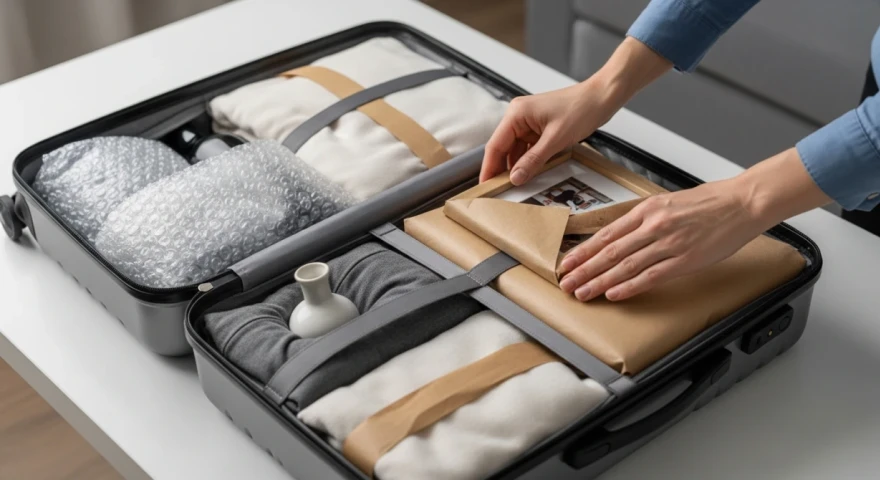
- Wrap each fragile item individually: Use soft clothes first. If an item is truly delicate or has glass, add simple extra wrap such as bubble wrap or a padded pouch before clothing goes around it.
- Put fragile items in the center, never against the shell: The middle of the packed case is the lowest-risk zone because force has to pass through other layers before it reaches the item.
- Separate item from item: Two bottles wrapped together can still break each other. Keep a soft divider between every hard object.
- Fill all side gaps: Tuck socks, scarves, or T-shirts around the protected item until it cannot shift when you gently press the case.
- Add a top cushion layer: Finish with another layer of folded clothes so the contents are protected from pressure when the suitcase is closed.
- Close and test: Zip the case and lightly shake it. If you hear movement, reopen and fill the gap that is allowing it.
For books or boxy flat objects that you use as stabilizers, place them side by side and use filler in open spaces so they do not slide. That same principle works well inside luggage: flat, stable pieces create better walls around a protected center.
Use bubble wrap for fragile objects, especially framed items or anything containing glass, to protect them during transit.
Packing Guidelines for Collection Material
How should you pack bottles, cosmetics, and toiletries?
Pack bottles upright when possible, seal them against leaks, and surround them with soft pressure from all sides. Cosmetics fail from two different risks, breakage and seepage, so they need both cushioning and containment.
Start by tightening caps and adding a simple secondary barrier such as a small bag around each liquid container. Then place each bottle inside a wash bag, pouch, or organizer so a leak cannot spread across the whole suitcase.
- Do: Wrap glass perfume or skincare bottles individually and stand them in the middle of the case.
- Do: Use soft items around the pouch so the container cannot tip or bounce.
- Do: Keep lids facing upward where practical.
- Don’t: Put a glass bottle next to shoes, chargers, or metal tools without a padded divider.
- Don’t: Leave half-empty space in a toiletry pouch, because movement inside the pouch becomes impact outside it.
For short trips, carry the most breakable or most important liquid item in the cabin if allowed and practical. If it must go in checked luggage, treat it as both fragile and potentially messy.
How should you pack electronics and small appliances?
Electronics are safest when kept with you in a structured carry-on or personal bag. If they must go in a larger case, use a fitted sleeve or padded compartment, keep them away from pressure points, and never let hard accessories bang against screens.
Laptops, tablets, cameras, headphones, and gaming devices are vulnerable in different ways. Screens crack under concentrated pressure, lenses scratch from rubbing, and cables can dent housings when packed loosely beside them.
- Keep together by function: Store chargers, adapters, memory cards, and cables in their own pouch so they do not drift into direct contact with screens or camera bodies.
- Use structured daily-carry storage: A laptop backpack or work bag keeps tech easier to inspect and less exposed to rough baggage handling.
- Pad flat surfaces: Place soft clothing on both sides of a laptop sleeve if it is inside a suitcase.
- Avoid edge loading: Do not place electronics right against the front, back, or corners of the case.
If security opens your bag, separate pouches and clearly defined layers usually make repacking easier. That is one reason organized interior systems outperform loose packing, even on short trips.

How should you pack souvenirs, gifts, jewelry, and small fragile items?
Small breakables need restraint more than bulk. The key is to give each item its own wrapped space, then group those wrapped pieces inside a larger pouch or clothing nest so nothing gets lost or collides.
Ceramic gifts, mugs, ornaments, and local souvenirs should be wrapped one by one and placed in the center of the suitcase. If an object has a handle, protruding edge, or decorative point, add extra softness around that weak spot because it will usually fail first.
Jewelry and tiny valuables need a different approach. Use a small closed pouch or compartment so pieces cannot migrate into seams, corners, or shoe interiors, and pad the pouch if it contains hard stones or metal components that can scratch each other.
- Do: Use socks for stemmed or narrow pieces and soft knitwear for wider ceramic items.
- Do: Pack gifts as if you will open the suitcase upside down. If something could fall or roll, it is not secure enough yet.
- Don’t: Rely on store gift boxes as protection. They are presentation packaging, not transport cushioning.
What should you do with sharp or pointed objects?
Sharp items belong in checked baggage when appropriate and should be sheathed, wrapped, and isolated from soft contents. This protects both your other belongings and anyone who may need to inspect the bag.
Pointed grooming tools, hooks, or small utility items can puncture fabric and create a chain reaction inside the case. A single exposed tip can tear a pouch, then press into a bottle or electronics sleeve nearby.
- Sheath first: Cover the point or blade so it cannot pierce through pressure or vibration.
- Wrap second: Add a firm layer around the item before it goes into a pouch.
- Zone it separately: Keep sharp items away from fragile zones and from anything liquid-filled.
- Use checked baggage when required: This follows standard security practice and reduces handling issues at screening.
When are clothes enough padding, and when do you need extra cushioning?
Clothing is enough for many moderately fragile items if it fills space firmly and creates cushioning on every side. You need extra wrap when the item is glass, thin-walled, pointed, high-value, or able to break from one focused hit.
This is where transport standards are useful in plain language. Cushioning works when it absorbs force and spreads it over a wider area, and clothing can do that well if it is thick, soft, and packed tightly. It works poorly when it is slippery, loosely draped, or compressed flat by a badly organized case.
Use clothing alone for sturdy cosmetics in plastic bottles, protected chargers, boxed accessories, and durable souvenirs. Add extra material for perfume in glass, ceramics, framed items, lenses, or anything with exposed corners.
If you are worried about wasted space, this is the opposite of waste. A sweater used as padding is still a sweater you needed to bring, and a compact suitcase organizer or pouch often replaces bulky single-use wrapping by keeping shapes fixed inside the bag.
How do you check that your packing job is good enough?
A good packing job feels solid, quiet, and evenly filled. If the case rattles, bulges around a hard edge, or lets one protected item press directly against the shell, it needs another round of adjustment.
Use a quick verification check before you leave for the airport:
- Shake test: Lift the packed case slightly and move it gently. You should not hear hard knocking.
- Press test: Push on the top and sides. The bag should feel firm but not strained, with no single object creating a hard point.
- Reopen test: If you unzip the case and a fragile item has migrated toward an edge, the buffer layers are too loose.
- Inspection test: Sensitive items should be easy to identify and remove in sections, rather than buried in a tangled pile.
For checked baggage, the final question is simple: if the suitcase were set down hard on one side, would a padded layer take the force before the item does? If the answer is no, rebuild that zone.
What if something still does not fit or feel safe?
If the item still shifts, leaks, or sits too close to the shell, do not force the packing plan. Change the bag, move the item to carry-on, reduce what else you are taking, or add a compact organizer so the contents stop competing for the same space.
The most common failure modes have straightforward fixes.
- Your case is soft and overstuffed: Remove one bulky layer, rebuild the center cushion, and keep fragile items away from the outer walls. If you travel this way often, a more structured suitcase is the cleaner long-term fix.
- You are short on space: Replace thick wrapping with dual-use clothing and move dense non-fragile items to the edges.
- Security may open the bag: Put fragile categories into separate pouches so inspection does not unravel the whole system.
- It is only a weekend trip: Use the shortened version: one base layer, one protected center pouch, one top layer, and keep your most delicate item in the cabin.
- You do not want to buy one-trip packing gear: Start with clothes, socks, and existing pouches. Then audit the weak points in your current setup and upgrade only the pieces that keep causing risk, such as an unstructured case or the lack of a dedicated bag for electronics.
That audit is often the real decision point. If your current setup has no structured checked case for breakables, no organized personal bag for tech, or no internal organizers for small items, browsing our suitcases, bags, and packing accessories is the practical next step.
Protecting fragile items in luggage comes down to three things: the right container, a layered interior, and zero uncontrolled movement. Hard-shell cases, structured personal bags, and simple organizers make those steps easier, but careful placement and cushioning matter no matter what bag you already own. Use clothes as your first line of padding, add extra wrap for true breakables, and verify the pack with a quick shake and press test before you travel. Run a fragile-protection audit on your current setup, then compare the gaps against our luggage, bags, and organizers before your next trip.
Can I safely pack fragile items in a soft suitcase?
Yes, if you create a padded center zone and remove empty space so items cannot shift. A soft case just depends more on your internal packing method.
Should glass bottles go in checked luggage or carry-on?
If practical, the safer option is to keep truly fragile glass with you. If a bottle must be checked, wrap it individually and place it in the middle of the case inside a sealed pouch.
Is clothing really enough to protect breakable items?
For many moderately delicate items, yes, as long as the clothing is thick and packed firmly on all sides. Thin glass, ceramics, and high-value items usually need extra wrap.
How do I stop electronics from getting damaged in transit?
Keep them in a structured personal bag when possible and separate cables from screens and lenses. If they go in a suitcase, use a sleeve and surround them with soft layers.
Will security ruin careful packing if they inspect my bag?
They can disrupt loose packing, but separate pouches and clear layers make inspection easier to manage. Organized sections are usually simpler to repack than a single mixed compartment.
What is the fastest safe method for a short trip?
Use one soft base layer, place the fragile item in the protected center, fill the side gaps, and finish with a top clothing layer. Keep your most delicate essential in the cabin if you can.
How can I tell if my suitcase is packed well enough?
The case should feel stable, with no rattling and no hard object pressing against the shell. A gentle shake and side press are the quickest checks before you leave.
 How to Build a Capsule Wardrobe for Travel That Works Anywhere in the World
 Travel Accessories Worth Packing in 2025: Essentials That Truly Upgrade Every Trip