
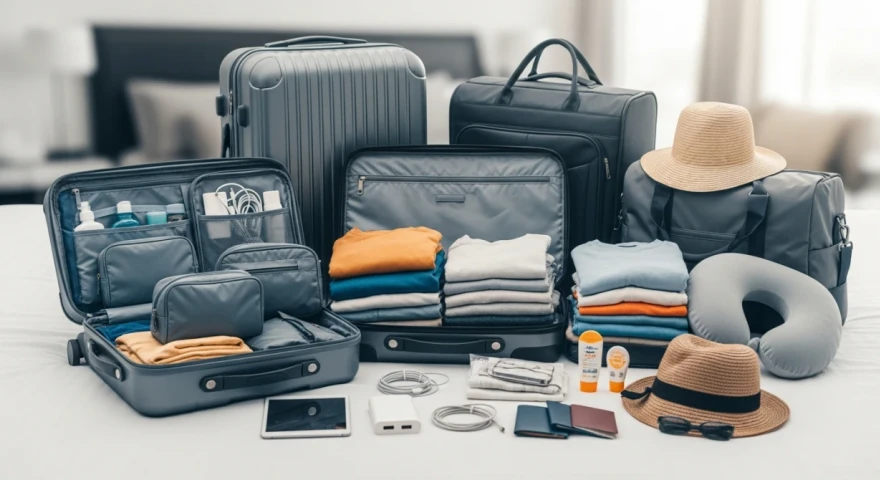
Family Holiday Packing Guide: Smart Luggage Planning for Kids and Adults
Pack by priority and access, not by habit. Give every bag a job, keep first-day essentials reachable, and use a final go/no-go check before leaving.
Most family trips do not go wrong because people forget everything. They go wrong because one bag holds too many “just in case” items while the one thing a child needs in the first hour is buried at the bottom. That mismatch creates stress before the vacation even starts.
Air travel, rail connections, road stops, and hotel check-ins all reward one skill above all others. You need fast access, clear ownership, and realistic limits. A strong family holiday packing guide starts with dividing load by use, not by person alone.
When parents pack by room at home, luggage often looks organized but fails in transit. The fix is simpler than most families expect. Set a readiness standard first, then assign every item to a priority tier, timing window, and bag type before the zipper closes.
🧭 Set the goal and measurable readiness criteria
Your goal is not to fit everything. Your goal is to move through the trip with each adult able to manage one primary case and one fast-access personal item, while each child has only what they can carry or what an adult can absorb without slowing the group.
Use measurable checks before you call the family ready. If a child’s outfit, sleep item, and travel snack cannot be reached in under one minute, the setup is not ready. If one adult must handle more than two pieces alone during a transfer, the plan is overloaded.
- Ready to depart: Each traveler has assigned bags, labeled contents, and a change of clothes accessible without opening the main case fully.
- Ready for transit: Documents, wipes, medication, chargers, and toiletries are in one grab zone, not split across multiple pockets.
- Ready for arrival: The first-night kit is packed on top, so nobody unpacks the whole family’s belongings after a long day.
- Ready for return: Leave one organizer or section empty for laundry and last-minute items.
A family setup works best when every item passes a simple test. It must either solve a likely need, support the first 24 hours, or earn its space through repeated use.
Pack for access first, volume second. Families lose time from bad bag structure more often than from missing space.
Practical travel rule
✅ Sort everything into must-do, should-do, and nice-to-do
This is where most overpacking stops. Priority grouping removes emotion from the decision and keeps children’s needs from getting mixed with optional extras.
Must-do items
These are the non-negotiables. If they are missing, the trip becomes harder immediately.
- Travel documents and essentials: Passports or IDs, booking details, payment method, medications, and one pen.
- Transit comfort for kids: One full change of clothes, wipes, tissues, refillable bottles if suitable for your trip, and one compact comfort item.
- Weather-ready basics: One layer for warmth, one practical pair of shoes, sleepwear, underwear, and toiletries decanted into travel bottles for hand luggage.
- Bag control items: Tags, locks, and a suitcase scale so no case becomes a surprise problem at check-in.
Should-do items
These improve the trip and often prevent small problems from growing.
- Clothing organizers: Use separate sections for each child or by category, such as tops, sleepwear, and swim items, to reduce rummaging and creasing.
- Comfort tools: A travel pillow, sleep mask, or earplugs can help adults and older kids rest during flights, trains, or coaches.
- Hand-luggage structure: Keep gadgets, snacks, and toiletries in one accessible pouch or compartment.
- Protection: A suitcase cover or strap helps spot the case quickly and reduces surface damage.
Nice-to-do items
These are worth adding only after the must-do and should-do categories fit cleanly.
- Extra outfit variety: Add only if the destination or occasion truly requires it.
- Backup entertainment: Bring one small spare activity, not a full toy collection.
- Second comfort item: Useful for longer travel days, but not if it makes the child’s bag bulky.
| Priority | What belongs here | Go signal | No-go signal |
|---|---|---|---|
| Must-do | Documents, medication, first-day clothes, toiletries, labels | All packed and easy to reach | Any critical item spread across multiple bags |
| Should-do | Organizers, comfort gear, covers, straps | Improves control without adding bulk | Creates extra bags or slows transfers |
| Nice-to-do | Optional outfits, extra toys, duplicate items | Fits remaining space with no strain | Forces compression or bag expansion |
⏱️ Pack in the right order and timing windows
Do not pack everything the night before. Family travel gets smoother when decisions happen in layers. The right timing also prevents duplicate purchases and last-minute guessing.
- Three to five days out: Confirm trip length, weather pattern, laundry access, and transport type. Assign one main case per adult and define what each child will carry.
- Two days out: Build outfits by day group, not by individual garment. Pack the must-do items first and place organizers into the main case before loose clothing goes in.
- One day out: Prepare hand-carry items, charge devices, fill travel bottles, and add comfort gear for the journey.
- Departure morning: Add fresh snacks, medicine that must stay out until leaving, and any final chargers. Reweigh larger cases if you have added shoes or toiletries late.
Execution order matters inside the case too. Heavy items sit low and near the wheel base, first-night items go on top, and anything needed during delays stays out of the checked bag.
Two realistic family setups
Scenario 1: Two adults and two young kids flying for one week. One medium or large case holds shared clothing in labeled organizers, one cabin-size case holds first-night and delay items, and each adult carries a compact personal bag with documents and kid essentials. Result: check-in stays calm, and a delay in the main case does not wreck the first day.
Scenario 2: One adult traveling by train with one school-age child for four days. A lightweight wheeled case covers clothing and shoes, while the child carries a small backpack with snacks, entertainment, and a sweater. Result: both travelers can move through stairs and platforms without stopping to rebalance the load.
🎒 Choose bag roles before choosing what goes inside
Bag selection should follow function. Families often need one main wheeled case, one fast-access personal bag, and optional organizers that split categories clearly.
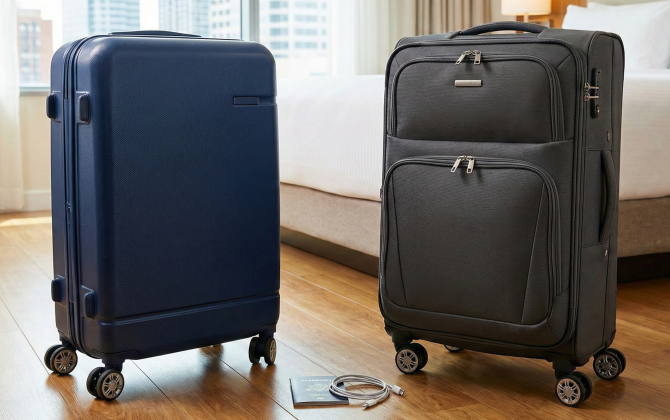
For the main case, hard shell and soft shell options solve different problems. Hard shell designs can help protect structured items and resist knocks, while soft shell versions can feel more forgiving when packing varied clothing shapes.
| Bag type | Best use in a family trip | Verified features | Practical watch-out |
|---|---|---|---|
| Suitcases | Main family clothing, shoes, bulkier items | Cabin, medium, large, small sizes. Hard shell in polycarbonate or ABS. Soft shell options. Wheels, telescopic handle, combination lock. | Do not put first-hour child essentials deep inside a checked case. |
| Luggage sets | Families that want coordinated sizes across adults and kids | Range of matching set options is available. | Check that every piece has a clear role before using the whole set. |
| Travel accessories | Organization, comfort, and quick access during transit | Organizers, covers, pillows, masks, earplugs, travel bottles, straps, tags, scales, locks, adapters. | Accessories should reduce friction, not create extra loose items. |
| Bags | Adult personal carry items and short day use | Travel-ready designs with practical crossbody, backpack, tote, and work bag options. | Keep personal bags slim enough to manage while handling kids. |
If you want one personal carry option for documents and electronics, a travel rucksack can work well when it stays structured and light. On the accessory side, the listed backpack options include the Bange 6801 in 14-inch and 15.6-inch versions, the Bange BG6800, and the Bange BG7529, all suited to organized hand-carry use rather than bulky family overflow.

🧩 Practical recommendations that save space and reduce stress
- Pack by function, not by family member alone: Keep all sleep items together, all swim items together, and all travel-day essentials together. This helps when plans change mid-trip.
- Give each child one color or section: A simple visual rule speeds up dressing and repacking, especially in shared hotel rooms.
- Build a first-24-hour kit: Include one outfit per person, basic toiletries, pajamas, and medication in the most accessible case.
- Use organizers to control volume: Stop adding clothing when the organizer closes comfortably. If it bulges, remove options rather than compressing harder.
- Limit shoes aggressively: One travel pair and one activity-specific pair usually beat carrying multiple backups.
- Keep all liquids together: Travel bottles and toiletry cases save time at security and prevent the family from searching through several bags.
These steps work because they protect time, not just space. Families feel “packed” when the zipper closes, but they feel prepared only when high-use items are reachable without unpacking half the bag.
⚠️ Control the biggest risks and critical misses
The most expensive mistake is not always forgetting an item. It is creating a bag system that fails during transfers, bathroom breaks, late arrivals, or tired-kid moments.
- Critical miss: Putting all spare clothes in checked luggage. Control: Keep one accessible outfit for each person in the cabin or top layer.
- Critical miss: Letting kids carry too much. Control: Limit their load to comfort items and light entertainment.
- Critical miss: No identification on cases. Control: Add tags and use a cover or strap to make spotting easier.
- Critical miss: Relying on memory for weights. Control: Use a scale before leaving home and after final additions.
- Critical miss: Spreading medications and documents across bags. Control: Keep them with one adult at all times.
Frequent mistakes families make
One common error is packing complete outfits into separate bags for each person. That sounds tidy, but it fails when a child spills juice, the weather shifts, or one bag gets delayed. Functional grouping is more resilient.
Another mistake is treating all trip accessories as helpful by default. Useful luggage accessories have a clear job, such as protecting a case, separating clothing, or keeping toiletries together. If an item adds bulk without speeding access, leave it home.
🚦 Final go/no-go readiness checklist
Run this test 30 minutes before departure. If any no-go item is true, reopen the bags and fix it.
| Checkpoint | Go | No-go |
|---|---|---|
| Ownership | Every bag has a named handler | One adult must juggle most pieces alone |
| Access | Kid essentials reachable in under one minute | Need to open the main case fully during transit |
| Weight control | Main cases can be lifted into a car, train rack, or hotel entry without strain | Any case feels too heavy before the trip begins |
| First night | Sleepwear, toiletries, and fresh clothes are easy to reach | Arrival requires a full unpack |
| Protection | Tags, locks, and visible identifiers are in place | Cases look unmarked and easy to confuse |
| Children’s load | Kids carry only manageable items | Their bags are packed like mini suitcases |
A family trip feels lighter when your system is strict before departure. The right split between main case, personal carry, and support items lets adults move confidently and keeps children comfortable without overloading anyone.
Use priorities, timing, and the go/no-go check instead of packing by instinct. That approach cuts clutter, protects the first day, and makes repacking for the return trip much easier. If you need practical gear for the setup, threebirds has options that support organized travel without unnecessary extras.
Should each child have their own suitcase?
Not always. Younger kids usually do better with a light personal bag while shared clothing stays in an adult-managed case.
What should stay out of the main checked case?
Keep medication, documents, one spare outfit per person, and first-hour child essentials within easy reach during transit.
Are organizers worth using for family travel?
Yes, if they separate clothing by function or child and still close easily. They help prevent creasing and reduce frantic searching.
How do I know if we packed too much?
If one adult cannot manage the group’s bags during a transfer, or if a case must be forced shut, the load is too heavy.
What is the best role for a personal backpack on a family trip?
It should hold documents, gadgets, toiletries, and fast-access kid items. It should not become overflow storage for the whole family.
When is a luggage set more useful than separate pieces?
A coordinated set helps when you want matching sizes and clear bag roles across the group. It works best when each piece has a planned purpose.
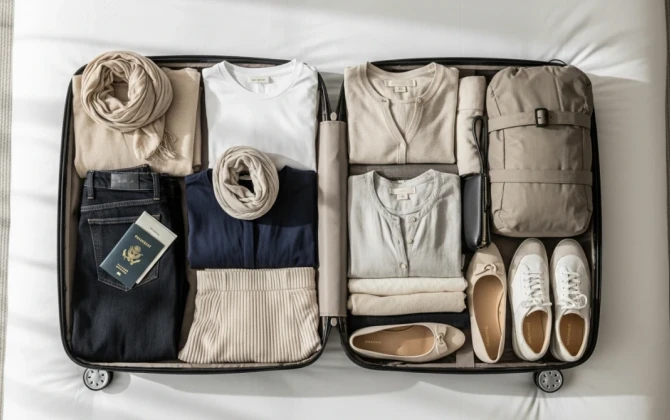 How to Build a Capsule Wardrobe for Travel That Works Anywhere in the World
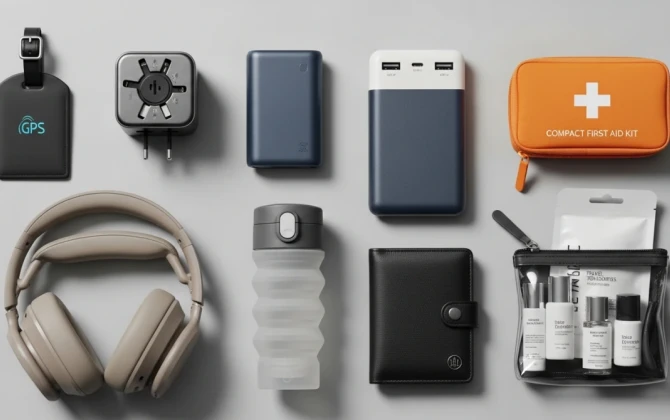 Travel Accessories Worth Packing in 2025: Essentials That Truly Upgrade Every Trip