
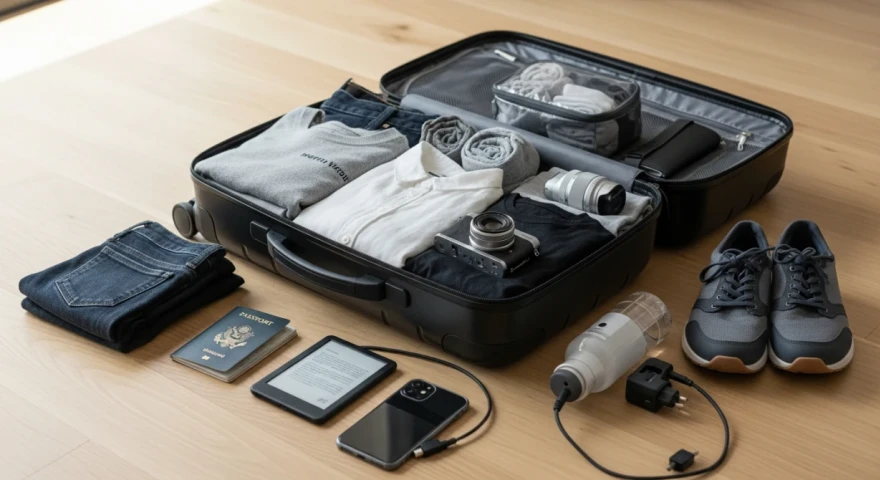
Conscious Travel: How to Pack Less and Experience More with a Smart Travel Rucksack
Define your priorities, choose a smaller but comfortable backpack, follow a strict clothing and gadget formula, use compact organizers, then test and trim your load so you move freely and focus on experiences.
You can spot it at every airport security line. One traveler floats through with a small backpack and calm face, while another wrestles two bulging suitcases, sweating over excess baggage limits. Both are going to the same place. Only one will actually feel free.
This gap has less to do with minimalism slogans and more with concrete choices. What you carry shapes how you move, what you notice, and even which streets you dare to walk down. Conscious travel starts with deciding what deserves to come with you and what quietly stays home.
The good news is that packing light is a repeatable skill, not a personality trait. With a clear workflow, you can reduce your load without feeling deprived and turn your bag into a tool instead of a burden.
✅ When packing less actually works (and when it does not)
Before you commit to a lighter way of traveling, check whether this approach fits your trip. Not every journey should be done with one small rucksack and strict limits.
Use this as a gate. If most of the “yes” statements match your situation, the workflow below is right for you. If most “no” statements fit better, you can still downsize, but do not force ultra‑light rules.
- Good fit: You will move often, use public transport, or walk long distances with your bag.
- Good fit: You can repeat outfits and do a small sink or laundromat wash.
- Good fit: You mainly carry clothes, a laptop or tablet, and small toiletries.
- Bad fit: You must transport bulky work gear, samples, or formal props.
- Bad fit: You are responsible for shared family items like strollers or sports equipment.
- Bad fit: Your trip has strict dress codes with no room to repeat pieces.
If your trip is a “good fit,” follow the next sections as written. If you are in a “bad fit” situation, still use the steps, but relax the strict quantity limits and plan for one additional checked bag if needed.
🧭 Get ready: clarify your trip and choose your main bag
Conscious packing starts before you touch a single T‑shirt. First, define how you will move and then pick one primary bag that supports that movement instead of fighting it.
Clarify how you will move
Write down three facts about your itinerary: how often you change bases, your main transport types, and your likely walking distance with luggage. This will directly influence your bag choice.
- Frequent moves: If you change cities every one to three days, prioritize a compact backpack that stays comfortable on your shoulders.
- Urban focus: For city trips with public transport, a slim profile helps on buses, trains, and in crowded streets.
- Stationary stays: If you stay in one hotel for a week, you can tolerate a slightly larger bag because you will not carry it daily.
Choose the right capacity and weight
Modern travel packs made from tough but light materials make it easier to limit what you bring. Ultralight models often use Dyneema Composite Fabric, which is significantly stronger by weight than steel and lighter than common nylons. Others rely on high‑tenacity Robic nylon with a water‑resistant coating. Both approaches keep the structure without extra bulk.
As a simple rule, a 30–40 liter backpack forces you to be selective and is usually enough for trips up to two weeks with washing. Larger bags in the 50–60 liter range are better if you carry work equipment or bulkier clothing for cold climates.
| Model | Approx. role | Strengths | Best for |
|---|---|---|---|
| Arctic Hunter B0388 Backpack – Blue | Everyday / short‑trip pack | Structured, practical for daily carry | Weekend city breaks and light business trips |
| Bange FM230 Backpack – Black | Business‑leaning backpack | Formal look with functional interior | Work trips with laptop and documents |
| Bange BG6625 Backpack – Black | Travel‑ready backpack | Durable materials and modern design | Frequent travelers wanting one main bag |
| Arctic Hunter B00111C Business Laptop Backpack – Black | Laptop‑focused pack | Great for tech and documents | Office‑heavy trips with minimal clothing |
Keep in mind that many ultralight backpacks weigh between 1 and 2.5 pounds. Combined with a 30–60 liter capacity, that weight range encourages you to prioritize compressible clothing and compact gear instead of bulky items.
Reducing the empty weight of your backpack compels you to make more deliberate choices about what you carry, which is one of the fastest ways to feel lighter and more mobile on the road.
For conscious travel, pick the smallest bag you feel slightly nervous about, not the biggest one you feel safe with. That small discomfort will keep your packing choices honest.
Decide what stays accessible
Once you have chosen your main bag, think about items you must reach quickly: passport, wallet, phone, tickets, hand sanitizer, and small snacks. A compact crossbody or long‑strap bag works well as your “personal item” that stays with you. These designs are particularly practical for city use and moving through stations or airports.
Keep this smaller bag as your mobile control center. Everything else lives in the main pack and only comes out when you reach your room.
🧱 Step-by-step: how to reduce what you carry
This sequence is designed to reduce volume without leaving out critical items. Follow the steps in order and resist the urge to “just add one more thing” between them.
Step 1: Define your non‑negotiables
Start with what truly matters. List the experiences you care about most on this trip: slow walks, local food, long café sessions with a book, or focused work blocks. Your gear should serve those priorities.
- Example: If your priority is exploring on foot, invest space in comfortable shoes and weather protection instead of multiple evening outfits.
- Example: If you must work on the go, your laptop, charger, and a compact mouse become non‑negotiable, while extra shoes move to “nice to have.”
Limit yourself to 5–7 non‑negotiable items or categories. Everything else is secondary by definition.
Step 2: Build a strict clothing formula
Conscious packing relies on formulas, not guesswork. Use a simple base formula and adapt it to your trip length and climate.
- For up to 7 days: 3 tops, 2 bottoms, 1 lightweight layer, 1 warmer layer, 1 set of sleepwear, 5–7 sets of underwear and socks.
- For 8–14 days: Keep the same numbers, but plan to wash once.
- Footwear: 2 pairs total, one on your feet, one in your bag.
Ensure every top matches every bottom in color and style. That single rule multiplies your outfit combinations without adding weight. Neutral tones with one accent color work well for this.
Step 3: Apply the “rule of three” to everything else
Use a hard cap of three in each additional category.
- Accessories: At most three small extras such as a belt, scarf, or piece of jewelry.
- Gadgets: Phone, laptop or tablet, and one other device like an e‑reader or camera.
- Toiletries: Only what fits in refillable travel bottles and a compact pouch.
If you catch yourself adding a fourth item in any category, remove or replace something. The rule forces trade‑offs instead of mindless accumulation.
Step 4: Choose smart travel accessories
Thoughtful small items can dramatically reduce bulk. Pack organizers keep clothes compressed and sorted, while dedicated pouches keep documents and electronics simple to handle. This is where you can lean on purpose‑built gear without increasing weight.
Consider compact organizers, soft toiletry cases, luggage straps, and covers that protect your bag from scratches and make it easier to spot at baggage claim. For longer transport days, a neck pillow, sleep mask, and earplugs can make overnight trains or flights much more bearable without taking much space.
You can find a focused selection of modern travel accessories that keep gear compact, organized, and easier to handle during check‑in and security checks.
Step 5: Lay everything out, then cut 20 percent
Place every single item on a bed or floor. Group by category rather than stuffing anything into the bag yet. Seeing it all at once exposes duplication and reveals where your load is heaviest.
- First pass: Remove any exact duplicates, like a second black T‑shirt or another pair of similar jeans.
- Second pass: Look for “just in case” items you have not used on recent trips.
- Final pass: Remove at least 20 percent of what remains. Trust that you can adapt on the road.
Only after those cuts should you start placing items into your main backpack and smaller personal‑item bag.
Step 6: Pack in order of importance, not category
Instead of packing all shirts, then all pants, and so on, pack in importance order. Place non‑negotiables first, then fill remaining space with lower‑priority items.
- Priority 1: Passport, money, cards, tickets, medications, critical tech, and chargers.
- Priority 2: Clothing formula and main shoes.
- Priority 3: Optional extras and comfort items.
If something does not fit by the time you reach Priority 3, it stays home. The bag, not your mood, makes the final decision.
🔍 How to know if you packed consciously
Once everything is in the bag, you need a way to check if you actually achieved a lighter, more intentional setup. Use these tangible signals before you leave the house.
- Weight test: You can lift your packed backpack with one hand and put it on comfortably without bracing against furniture.
- Mobility test: You can walk up and down a flight of stairs at home without feeling strained or unbalanced.
- Access test: You can reach passport, wallet, phone, and one pen within five seconds from your smaller bag.
- Clothing test: You can create at least six different outfits from your clothes without repeating the exact same combination.
If you fail more than one of these tests, reopen the bag and remove another 10–15 percent. Better to do that now than while kneeling on the floor of an airport terminal.
🛠 If things go wrong: fallback moves on the road
Even with careful planning, trips rarely go exactly as expected. Conscious travel is not about getting everything right in advance. It is about adapting with minimal stress when reality changes.
- If the weather turns colder: Wear your warmest layers at the same time to reduce what you carry and consider buying one local second‑hand item instead of packing heavy “just in case” jackets.
- If you need formal wear unexpectedly: Rent or borrow for a single event instead of hauling a suit or dress you might not use again.
- If your bag feels too heavy mid‑trip: Ship a small parcel of low‑value items home or donate a few pieces you are clearly not using.
- If your organization fails: Pick up a small organizer or pouch on the road to separate laundry, electronics, or toiletries instead of upgrading to a larger bag.
Treat every unexpected situation as feedback. Ask whether a small, targeted purchase or adjustment solves the problem instead of defaulting to “I should have brought more.”
🧳 Real packing examples: weekend vs two‑climate trip
Concrete scenarios make the trade‑offs clearer. Here are two realistic setups using a compact backpack and a limited clothing formula.
| Trip type | Main bag | Clothing formula | Key add‑ons |
|---|---|---|---|
| 3‑day city break | Bange BG6800 Backpack in Black | 2 tops, 1 bottom, 1 light layer, 1 pair of shoes, 3 sets of underwear and socks | Small toiletry case, document pouch, compact umbrella |
| 10‑day trip, warm city + cool mountains | Bange BG7529 Backpack in Grey | 3 tops, 2 bottoms including one warmer pair, 1 light layer, 1 warm layer, 2 pairs of shoes | Organizers for clothes, packable scarf, lightweight hat and gloves |
In both cases, you can add a slim crossbody for documents and daily essentials. That combination leaves your hands free and keeps your main bag light enough for trains, buses, and stairs.

📦 Smart gear: bags and accessories that support packing light
Your choices in luggage and small gear can either support a minimal load or quietly push you toward overpacking. Focus on items that combine structure, durability, and compact design.
Backpacks that work as your only bag
Several backpacks are well suited to being your single main bag for short or moderate trips. Options like the Bange 6801 in either 14‑inch or 15.6‑inch laptop versions balance work needs with streamlined size. The same applies to the Arctic Hunter B00690 Backpack, which offers a practical shape for everyday carry during travel.
These designs sit between a small daypack and a full suitcase. That middle ground is ideal when you want one piece you can carry on a plane and still store easily in a train rack or under a café table.
Organizers and comfort items that earn their place
Not every extra item is clutter. A few smart pieces can reduce friction and protect what you carry.
- Clothing organizers: Keep shirts and pants in separate cubes to avoid rummaging and reduce creasing.
- Luggage covers and straps: Protect your bag from scuffs and make it easier to spot on a carousel if you ever need to check it.
- Sleep kit: A small pillow, mask, and earplugs can transform a long journey without adding much volume.
- Hand luggage pouches: Dedicated cases for documents, gadgets, and toiletries keep airport checks smooth.
These additions justify their space when they save time or stress on every single transfer instead of serving a single rare scenario.
🎒 How to choose and use a rucksack consciously
The goal is not just to buy a lightweight rucksack but to use it in a way that supports the kind of trip you want. Start by choosing a capacity that feels slightly constrained, a design with strong materials, and comfortable straps for daily wear.
During your trip, keep your pack only two‑thirds full when leaving home. That reserve space lets you handle groceries, a light jacket, or one small souvenir without needing an extra bag. When you return, review what stayed untouched and remove it from your list next time.
Over a few journeys, this simple feedback loop will make your travel rucksack setup more dialed‑in than any generic checklist. Your bag becomes a reflection of what you actually do on the road, not what you worry might happen.
🧠 Common mistakes that quietly add weight
Even experienced travelers slip into patterns that add bulk without improving the trip. Spotting these patterns helps you avoid them.
- Over‑optimizing for rare events: Packing full outfits for hypothetical invitations instead of planning one flexible smart‑casual look.
- Toiletry duplication: Carrying full‑size bottles or several versions of similar products instead of decanting into smaller containers.
- Gadget overload: Bringing a laptop, tablet, e‑reader, and camera “just in case” when two well‑chosen devices would cover everything.
- Sentimental extras: Adding books, journals, or hobby gear that you realistically will not touch during a short trip.
Review past journeys and notice which items always come back unused. Make a rule that they must stay home for at least the next two trips before you reconsider them.
📌 Quick practical guidelines for conscious packing
- Set a hard volume limit: Choose one backpack and commit to it instead of upgrading size at the last minute.
- Count outfits, not items: Ensure every piece contributes to multiple combinations.
- Favor lighter materials: Whenever possible, pick fabrics that compress well and dry fast.
- Keep hands free: Use a backpack and a small shoulder or crossbody bag rather than multiple handheld items.
- Review post‑trip: After each journey, remove everything you did not use and adjust your default list.
✅ Key takeaways for packing less and feeling more present
Packing consciously is not about traveling with the absolute minimum. It is about carrying only what you need to move freely and focus on experiences instead of luggage. A right‑sized backpack, a simple clothing formula, and a few well‑chosen accessories can replace heavy suitcases and constant repacking.
By testing your bag before departure, using clear rules to cap categories, and adjusting after each trip, you build a personal system that gets easier every time. The reward is obvious on the road: fewer logistics, more energy, and a mind that is free to notice where you are instead of worrying about what you brought.
If you want gear that matches this approach, threebirds offers a focused range of durable backpacks and organizers that support lighter, more intentional travel.
How do I know what backpack size is right for a 7-day trip?
Most travelers can manage a 7-day trip with a 30–40 liter backpack when they follow a tight clothing formula and plan to do one small load of laundry.
Should I roll or fold clothes when packing light?
Either works as long as you group items in organizers and avoid overstuffing; rolled clothes usually compress better in packing cubes.
How many shoes are reasonable for conscious travel?
Limit yourself to two pairs, one on your feet and one in your bag, and make sure both work with most of your outfits.
What is the most common item people overpack?
Clothing tops and toiletries are usually the worst offenders, because small individual items add up quickly without being noticed.
How can I keep my passport and money accessible but safe?
Use a slim crossbody or shoulder bag as a dedicated personal item and always keep it on you during transport and check‑ins.
What should I do if I realize mid-trip that my bag is too heavy?
Identify items you are not using, donate or mail some home, and avoid buying bulky souvenirs that increase the load further.
Are packing cubes really necessary for traveling light?
They are not essential, but they help compress clothes and keep categories separate, which makes it easier to maintain a smaller load.
How often should I review and adjust my packing list?
Do a short review after every trip, remove anything unused, and update your list so each future journey becomes lighter and more focused.
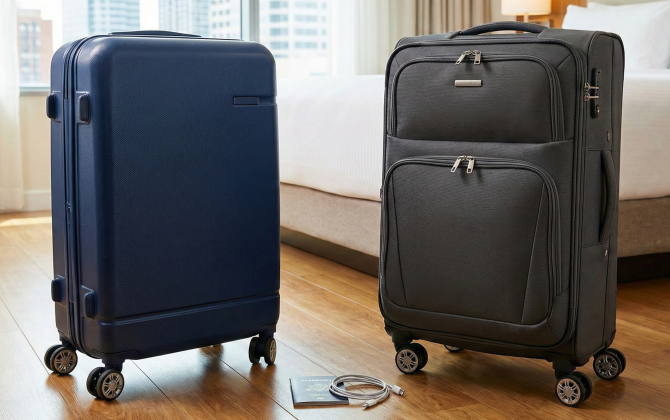
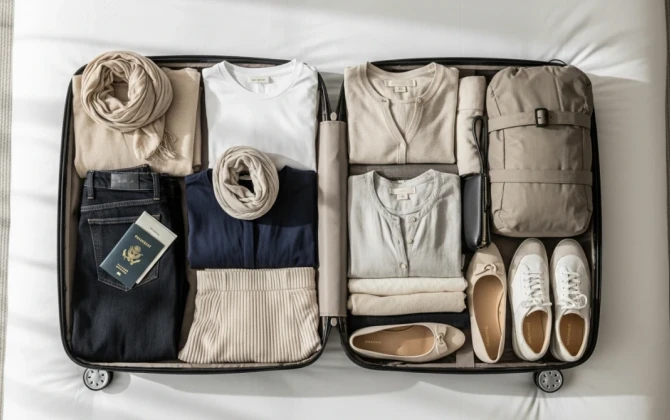 How to Build a Capsule Wardrobe for Travel That Works Anywhere in the World
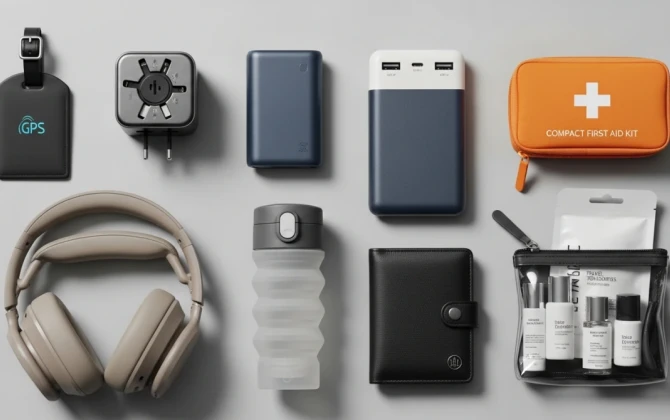 Travel Accessories Worth Packing in 2025: Essentials That Truly Upgrade Every Trip