
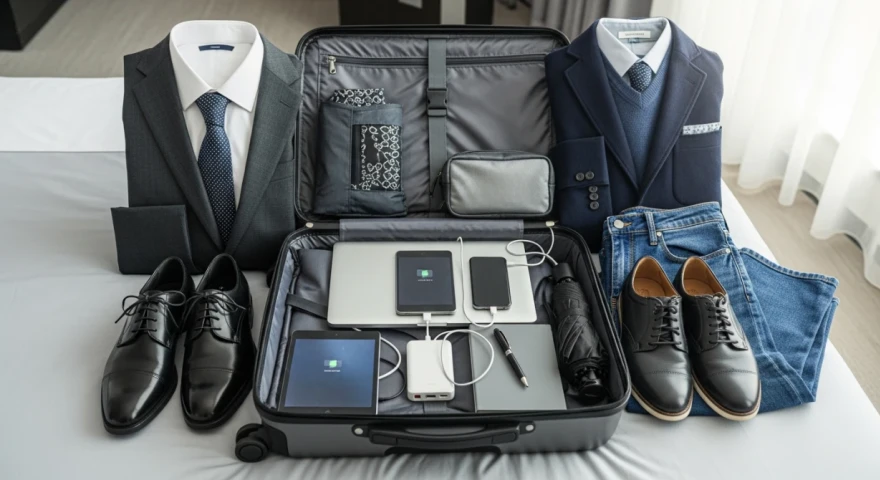
Business Travel Packing Checklist for a Smooth Monday Meeting to Friday Flight
Pack for a workweek by separating must-have meeting items from backup and optional pieces, then check a clear go/no-go list before leaving. Keep day-one essentials accessible and the rest organized by function.
Most work trips go sideways before you leave home. The usual problem is not forgetting a suit or a charger. It is packing everything with the same priority, then discovering at the hotel that the one item you needed before a client meeting is buried under five days of clothing.
That is why a strong Business Travel Packing Checklist should work like an execution plan, not a random pile of reminders. A weekday trip needs fast access, wrinkle control, and a clear line between what must be with you on day one and what can stay zipped until Thursday.
🧭 Define the goal and your readiness standard
For a Monday meeting through Friday return, your packing goal is simple. Arrive with every meeting-critical item accessible within two minutes, keep your workwear presentable through the week, and avoid checking a bag unless the trip truly requires it.
Use measurable readiness criteria before you close your case. If you cannot confirm each point below, you are not ready yet.
- Meeting ready: Your first-day outfit, shoes, laptop, charger, ID, and presentation materials are all reachable without unpacking the full bag.
- Week coverage: You have enough business clothing, sleepwear, underlayers, and essentials for five days, plus one backup shirt or top.
- Device continuity: Every device you need for work has its correct cable and power solution packed in one place.
- Airport control: Liquids, documents, and security items are grouped for quick access.
- Return leg readiness: There is space for used clothing so clean and worn items stay separated by Friday.
If your bag fails any one of those checks, fix that before thinking about extras. Priority beats volume every time.
✅ Sort everything into must-do, should-do, and nice-to-do
This is the step that prevents overpacking. Instead of asking what might be useful, ask what would create a real problem if it were missing on a business day.
Must-do items
- Work core: Laptop, charger, phone, phone cable, ID, wallet, keys, and any meeting notes.
- Day-one clothing: Your main meeting outfit, belt if needed, socks or hosiery, and polished shoes.
- Toiletries for function: Toothbrush, toothpaste, deodorant, medication, and travel bottles for liquids that need to stay in hand luggage.
- Bag choice: A practical crossbody or long-strap option for moving through stations, airports, and city streets, or a compact business backpack if you need both hands free.
Should-do items
- Clothing backup: One extra shirt, blouse, or tie in case of spills or weather shifts.
- Organization tools: Organizers for clothes in the suitcase to separate formal wear, sleepwear, and laundry.
- Comfort and control: Sleep mask, earplugs, or a neck pillow if you know your route includes an early departure or a late arrival.
- Protection: Luggage tags, straps, or locks if your route includes transfers or checked baggage.
Nice-to-do items
- Image polish: A second pair of business shoes only if your agenda includes multiple formal events.
- Convenience extras: Suitcase cover for easy spotting and surface protection.
- Buffer items: Small personal extras that improve routine, as long as they do not displace work-critical gear.
This priority split also tells you where to cut if space gets tight. Remove nice-to-do items first, then review the should-do group, and do not touch the must-do set.
👜 Choose the right bag setup for a five-day work trip
The wrong bag creates friction all week. For this kind of schedule, you usually need one main case plus one personal item that can move cleanly from airport to meeting.
| Model | Type | Color listed | Price listed | Best fit for this trip |
|---|---|---|---|---|
| Arctic Hunter B00111C Business Laptop Backpack | Business laptop backpack | Black | £28 | Best for laptop-first packing and daily commuting between hotel and meetings |
| Bange 6801 14-Inch Laptop Backpack | Laptop backpack | Black, Blue | £35 | Good when you carry a smaller computer and want a tighter, lighter profile |
| Bange 6801 15.6-Inch Laptop Backpack | Laptop backpack | Black, Blue | £35 | Useful if your device is larger and you still want a compact business setup |
| Bange BG6800 Backpack | Backpack | Black, Blue | £40 | Balanced option for mixed work and transit days |
| Bange BG7529 Backpack | Backpack | Black, Grey | £35 | Works well for shorter urban transfers and organized daily carry |
If your trip centers on presentations, a laptop backpack is the safer default because the work gear stays stable and protected. If you want lighter city movement after meetings, crossbody or long-strap styles are practical for commuting and walking between appointments.
A dedicated travel bag should not become a storage bin for everything. It should separate business gear from clothing and keep your first 24 hours accessible without a full unpack.
⏱️ Pack in the right order and use timing windows
Packing order matters because the items you need first should be packed last, but placed where they can be reached first. That sounds obvious, yet this is where many travelers lose time on arrival.
- 48 hours before departure: Confirm itinerary, weather, hotel laundry options if relevant, and dress code for each meeting.
- Night before: Pack all clothing, shoes, sleepwear, and non-daily toiletries. Place formal pieces in organizers to reduce creasing.
- Last hour before leaving: Add laptop, chargers, wallet, ID, phone, medication, and the first-day outfit accessories.
- At the door check: Verify that documents, devices, and liquids are in a top-access zone, not under folded clothing.
For a Monday start, place Monday and Tuesday items together. That reduces rummaging when you arrive late Sunday night or early Monday morning.
| Timing window | What to pack | Why it belongs here |
|---|---|---|
| Two days out | Core clothing plan and backup outfit | Lets you catch missing laundry, tailoring, or dress code issues |
| Evening before | Main case, shoes, organizers, nonessential toiletries | Stable items are less likely to be forgotten |
| Morning of departure | Laptop, phone, chargers, documents, medication | Prevents last-minute device and document misses |
| Security line stage | Liquids pouch and quick-access items | Speeds screening and avoids bag disruption |

⚠️ Control the risks that most often derail a work trip
On a business itinerary, the biggest failures are usually small and preventable. A wrinkled shirt is annoying. A missing laptop charger before a client deck is a real operational miss.
- Risk: no presentation power. Pack the device charger in the same compartment as the laptop, never in a clothing cube.
- Risk: spilled liquids. Use travel bottles and isolate them from papers, electronics, and fabric that must look sharp on arrival.
- Risk: mixed clean and worn clothing. Reserve one organizer or section for used items from day one.
- Risk: slow airport screening. Keep carry-on accessories such as liquids and documents together near the opening of the bag.
- Risk: damaged checked case. If you check baggage, use visible tags and protective add-ons that make identification faster and handling cleaner.
Practical recommendations that pay off immediately:
- Pack one outfit as a complete set: Do not split the first meeting look across three compartments.
- Keep one cable pouch only: Every wire and plug goes in one place, not “wherever it fits.”
- Use clothing organizers by function: One for business wear, one for casual evening pieces, one for laundry.
- Choose one personal carry format: Switching between tote, briefcase, and backpack midweek increases the chance of leaving something behind.
- Leave margin in the bag: A stuffed case makes Friday repacking harder and increases wrinkling.
📍 Two realistic packing scenarios
Scenario 1: Monday client presentation, same-day hotel check-in
A traveler lands at 8:30 a.m., heads straight to the office, and cannot check into the hotel until afternoon. The best outcome comes from carrying the meeting outfit, laptop, and grooming basics in the personal bag, with the main case holding the rest of the week.
In that setup, the Arctic Hunter B00111C business laptop backpack fits the job well because the work tools stay separate from clothing. The result is faster transit and no need to open the main case before the first appointment.
Scenario 2: Midweek train transfer and Friday flight home
A traveler changes cities on Wednesday and flies back Friday evening. When clothing is divided into clear categories and used items are isolated early, the transfer stays tidy and the final repack takes minutes instead of turning into a hotel-floor reset.
This is where Travel accessories and well-chosen luggage accessories earn their place. Organizers, tags, and a scale are not decorative add-ons. They reduce friction when the schedule gets tighter in the second half of the week.
🚦Go or no-go checklist before you leave
Run this final control five minutes before departure. If any must item gets a “no,” stop and fix it.
- Go: Laptop powers on, charger packed, phone cable packed, and battery level is adequate for transit.
- Go: Monday meeting clothing is complete and accessible without unpacking the whole case.
- Go: ID, wallet, keys, and booking confirmations are in the same grab zone.
- Go: Toiletries are sealed, compliant with hand-luggage use, and separated from electronics.
- Go: One section is reserved for worn clothing and receipts.
- No-go: Any essential item is “probably in there somewhere.” That means repack now.
- No-go: Your bag is full enough that you need force to close it. Remove nonessential items before damage or creasing starts.
A five-day business trip is easier when the bag supports the schedule instead of fighting it. Set a readiness standard, sort by priority, pack in the right order, and protect the items that can actually break the week. If you want a cleaner work-ready setup, threebirds offers practical bag options and useful gear for organized travel.
What is the most important item group for a Monday morning meeting?
Your first-day outfit, laptop, charger, ID, and meeting materials should be reachable without opening the full case.
When should I pack electronics for a work trip?
Pack clothing the night before, then add your laptop, phone, chargers, and documents in the last hour before leaving.
Why use organizers on a five-day business trip?
They keep formal wear separate, reduce wrinkling, and make it easier to split clean items from worn ones by midweek.
Is a crossbody or backpack better for city business travel?
A crossbody or long-strap bag is practical for urban movement, while a laptop backpack works better when device access is the top priority.
Which listed backpack suits a laptop-focused work trip best?
The Arctic Hunter B00111C Business Laptop Backpack in black is a strong fit when your work gear needs to stay organized and easy to reach.
What should trigger a no-go decision before leaving home?
If any must-have item is unconfirmed or your case is overfilled enough to strain the closure, do not leave until it is fixed.
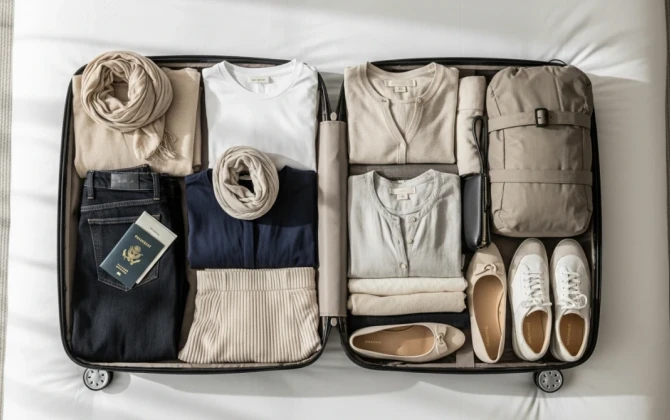 How to Build a Capsule Wardrobe for Travel That Works Anywhere in the World
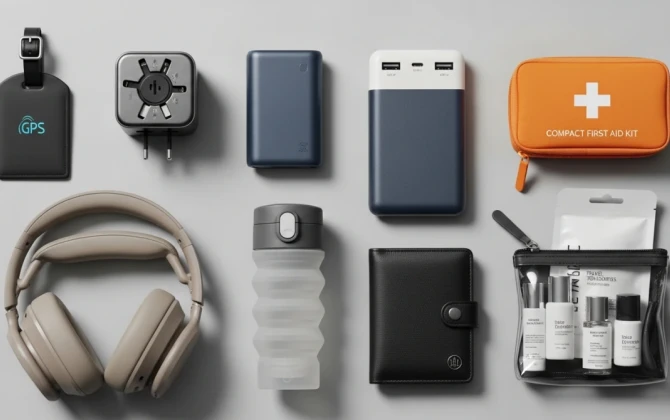 Travel Accessories Worth Packing in 2025: Essentials That Truly Upgrade Every Trip